| HS Code | 925405 |
| Density | 1.04 g/cm³ |
| Melt Flow Rate | 20 g/10min |
| Tensile Strength | 46 MPa |
| Elongation At Break | 20% |
| Flexural Strength | 60 MPa |
| Izod Impact Strength | 20 kJ/m² |
| Rockwell Hardness | R110 |
| Heat Deflection Temperature | 80 °C |
| Vicat Softening Temperature | 98 °C |
| Volume Resistivity | 1.0E16 Ω·cm |
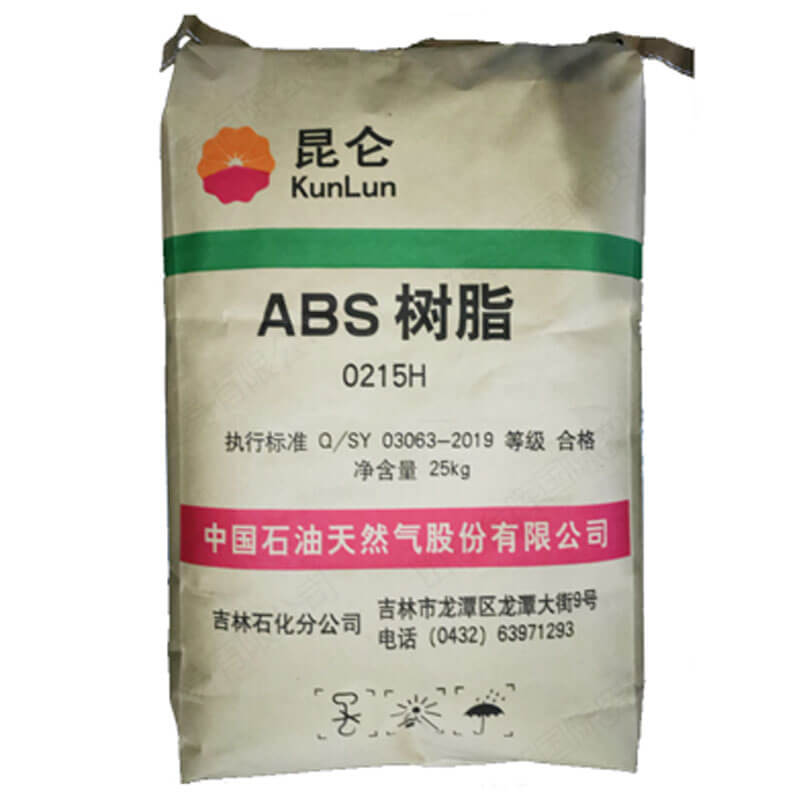
As an accredited Acrylonitrile‑Butadiene‑Styrene Resin 0215H factory, we enforce strict quality protocols—every batch undergoes rigorous testing to ensure consistent efficacy and safety standards.
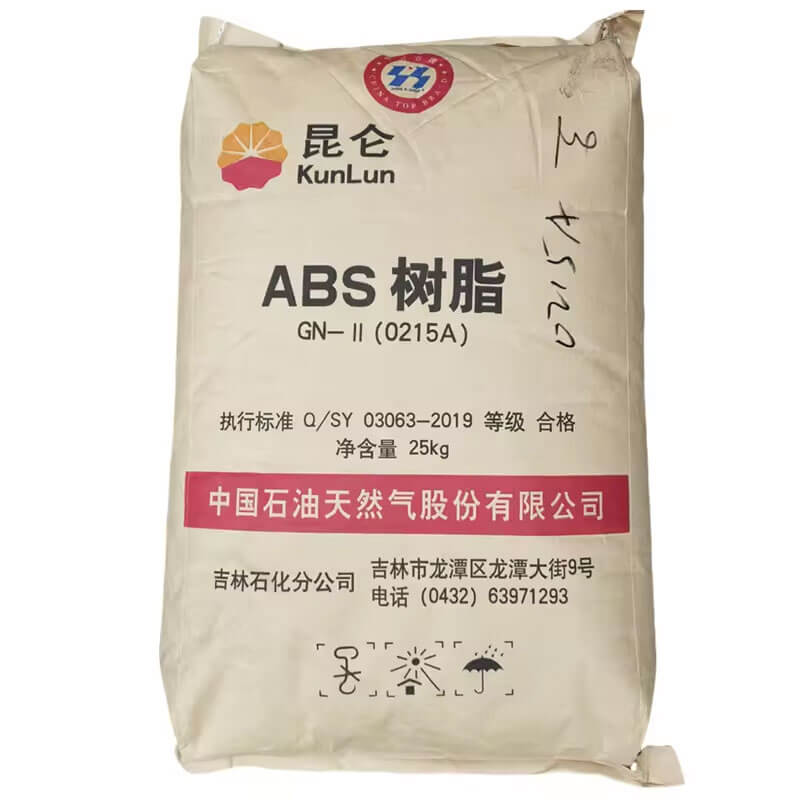
| Packing | 25 kg net, packed in polyethylene-lined multi-wall paper bags, palletized and stretch-wrapped for safe transport. |
| Container Loading (20′ FCL) | 20′ FCL loading of Acrylonitrile-Butadiene-Styrene Resin 0215H, packed in bags on pallets, secured for safe transport. |
| Shipping | Acrylonitrile-Butadiene-Styrene Resin 0215H ships as solid pellets in moisture-proof bags, fiber drums, or bulk hoppers. Avoid exposure to excessive heat, open flames, and direct sunlight. Keep dry and ventilated. No special hazard classification for transport, but ensure secure loading to prevent bag damage and contamination. |
| Storage | Store ABS Resin 0215H in a cool, dry, well-ventilated area away from direct sunlight, heat, and ignition sources. Keep containers tightly sealed to prevent moisture absorption and contamination. Avoid dust accumulation, static discharge, and contact with strong oxidizers. Maintain good housekeeping and follow local storage regulations to preserve material quality and safety. |
| Shelf Life | Stable for 12 months when stored in original sealed packaging in a cool, dry, well-ventilated area away from direct sunlight. |
After desiccant drying of ABS 0215H at 80–90 °C for 2–4 h to a residual moisture content below 0.02%, unpainted interior trim is compounded to reduce gloss without post-moulding coatings. Production-scale injection moulding of instrument panel topper pads, door handle cups, and steering column shrouds on machines with L/D 20–24 general-purpose screws operates at melt temperatures of 220–250 °C and mould surface temperatures of 40–70 °C, with specific clamp force held between 3.0 kN/cm² and 5.0 kN/cm² of projected area to prevent flash at thin vented rims. Addition ratios at the compounder are based on 100 phr ABS 0215H with 0.3–0.7 phr zinc stearate internal lubricant, 0.3–0.8 phr hindered phenolic/phosphite antioxidant, 2–5 phr crosslinked styrene-acrylic matting agent, and 2–4 phr carbon black or OEM-specified masterbatch. Gloss measured according to ISO 2813:2014 at 60° incident angle is held below 3.0–5.0 GU for high-end cockpit zones, while scratch resistance is evaluated by the VDA 230-216 multi-finger test with delta L* values below 1.5 after 500 cycles. Regulatory compliance for this application includes REACH Annex XVII and Directive 2000/53/EC end-of-life vehicle requirements, with low-VOC performance verified by VDA 277:2019 and odour by VDA 270:2018; published data for this specific 0215H grade should be checked against vehicle interior emissions limits. The moulding process uses sequential valve-gated hot-runner systems with gate diameters not less than 1.0–1.5 mm, and packing pressure is maintained at 50–70 MPa for 1.5–3.0 s after filling to avoid sink over bosses. Finished components include door handle cups, steering column shrouds, dashboard trim strips, and console side panels that must survive heat ageing at 85 °C/72 h with no visible gloss migration or dimensional change exceeding 0.5%.
ABS 0215H is used for information technology equipment enclosures that do not require a V-0 listing and are not in direct contact with uninsulated live parts. Injection moulding conditions for router enclosures and circuit breaker covers on machines with L/D 20–24 identical to standard ABS screws use a barrel temperature profile from 190 °C at the feed throat to 230–245 °C at the nozzle, and mould temperatures of 30–50 °C are sufficient for dimensional accuracy. The formulation is set at 100 phr ABS 0215H with 0.3–0.8 phr primary antioxidant, 0.2–0.5 phr secondary antioxidant, 0.5–1.5 phr internal mould release, and 1–3 phr color concentrate; static-dissipative variants incorporate 5–15 phr conductive carbon black to achieve surface resistivity between 10^6 Ω/sq and 10^9 Ω/sq measured by ANSI/ESD STM11.11. UL 94 HB classification is assessed on 1.5 mm and 3.0 mm bars, and the compound must not exceed the applicable burning rate criteria in IEC 60695-11-10. For products falling under IEC 62368-1:2018, external enclosure parts are additionally subjected to ball pressure testing per IEC 60695-10-2 at 75 °C, with the indentation diameter not exceeding 2.0 mm. Process limitations are significant: ABS 0215H is not flame-retarded, and substitution into products requiring UL 94 V-0 or V-2 at any thickness is outside its qualified operating window. When hot-runner systems are used, nozzle tips should be thermally gated with no dead zone exceeding 2.5 mm because residence time above 245 °C accelerates polybutadiene degradation and raises yellowness index measured by ASTM E313-20. Finished terminal products include small business router housings, CCTV camera enclosures, power adapter shells, and switch plates where post-mould machining is limited to snap-fit features and ultrasonic welding joints.
Chromic acid etching of ABS 0215H substrates for decorative electroplated exterior components is selected only after the butadiene phase has been verified by scanning electron microscopy to form etch pits 0.5–5 µm in diameter after treatment in a solution containing 380–420 g/L CrO₃ and 180–220 g/L H₂SO₄ at 60–70 °C for 5–10 min. The compound formulation for plateable parts differs from standard injection moulding grades: 100 phr ABS 0215H is processed without mineral fillers, without external mould release, and with regrind limited to ≤20 phr to avoid local variation in etch pit density at the surface. Moulding is performed with higher mould temperatures of 60–80 °C and melt temperatures of 230–250 °C to reduce frozen-in stress below 30 MPa when measured by photoelastic inspection or solvent stress cracking in glacial acetic acid. Decorative plating lines then deposit electroless nickel 0.2–0.5 µm, electroplated copper 15–25 µm, semi-bright nickel 8–12 µm, bright nickel 8–12 µm, and chromium 0.25–0.5 µm; adhesion is assessed by ASTM B604-91 thermal cycling and ASTM D3359 cross-cut testing, with no flaking after 3 cycles between -30 °C and 80 °C. Compliance for exterior automotive plated plastics includes ASTM B604-91, ASTM B368 CASS testing for 16 h on chromium surfaces, and REACH Annex XIV restrictions on chromium trioxide as a process chemical under authorisation. Published data for this specific 0215H grade on commercial electroplating lines is limited, so etch time and rack current density must be re-qualified when replacing a dedicated plating grade. Terminal products are automotive grille surrounds, fog lamp bezels, trunk garnish inserts, and wheel centre caps where thermal expansion mismatch between the plated layer and substrate is controlled by limiting part size and avoiding sharp radii below 2.5 mm.
Industrial ABS pipe fittings injection-moulded from ABS 0215H are qualified against ISO 15493:2003 for thermoplastic piping systems in industrial applications and ASTM D2468-23 for Schedule 40/80 fittings, with hydrostatic design stress verified at 20 °C and 60 °C over 1 000 h and 1 h regression intervals. The formulation uses 100 phr ABS 0215H with 0.5–1.0 phr antioxidant, 1–2 phr TiO₂ for opacity, and no plasticizer or processing aid that could reduce solvent-weld fusion; regrind from sprues and runners is limited to ≤30 phr because higher fractions widen melt-flow index measured by ISO 1133-1:2022 and produce inconsistent packing at the fitting root. Injection moulding of valve bodies and flanges is conducted at melt temperatures of 220–240 °C and mould temperatures of 30–60 °C, with gate design placed on the non-sealing land to avoid a weak knit line in the sealing area. The limiting factor in solvent-welded joint integrity is not the fitting material itself but residual moulded-in stress around the gate, which accelerates environmental stress cracking when assembled with commercial ABS solvent cement formulations containing methyl ethyl ketone and cyclohexanone. Joint assembly follows ASTM D2235 with a 0.2–0.4 mm interference fit and a minimum cure time of 24 h before hydrostatic testing at 1.5 times the design pressure. Finished terminal products include flanged adapters, valve bodies, DWV connectors, and threaded transition fittings; each lot is tested for short-term hydraulic burst pressure per ISO 15493 and for tensile properties of the moulded fitting body according to ASTM D638-14. Published data on ABS 0215H in pressure piping configurations indicates acceptable performance only when the melt processing window is tightly controlled below 245 °C; above this threshold, unpigmented parts show yellowing and a reduction in impact strength measured by ISO 179-1:2020.
Vacuum cleaner motor housings and power tool casings moulded from ABS 0215H replace mineral-filled polypropylene in applications where a balance of low-frequency noise damping and structural rigidity is required after continuous motor service. Compliance with IEC 60335-1:2020 is supported by glow-wire ignitability testing per IEC 60695-2-11 at 550 °C for unattended appliances and ball pressure testing per IEC 60695-10-2 at 125 °C, while restricted substances are managed under REACH Annex XVII and RoHS Directive 2011/65/EU. The formulation adds to 100 phr ABS 0215H a stabiliser package of 0.4–1.0 phr primary phenolic antioxidant and 0.2–0.6 phr secondary phosphite, with 2–4 phr OEM color masterbatch; where parts are exposed to indirect UV through windows, 0.2–0.5 phr of hindered amine light stabiliser is included. Injection moulding on machines with L/D 20–22 screws uses melt temperatures of 210–240 °C and mould temperatures of 30–60 °C, with rib thickness held between 40% and 60% of nominal wall to avoid sink marks at the motor support bosses. Weld lines at the intake grille are relocated by valve-gated hot runners to the low-stress side of the housing because butt welds in unfilled ABS reduce tensile strength relative to the base material, and the retention ratio must be verified by tensile testing per ISO 527-2:2012. Published data for this specific grade’s weld-line retention ratio is limited, so production trials with burst pressure testing of assembled housings are required. Terminal products include vacuum cleaner dust compartment housings, brush motor covers, and portable tool battery shells where snap-fit strength after 1 000 assembly cycles is checked by fixture torque tests.
ABS 0215H is injection-moulded into reusable transit cases, tote bins, and double-walled equipment housings where long-term stacking strength and drop resistance are required under logistic handling. The moulding process for a 3.0–5.0 mm nominal wall uses melt temperatures of 220–250 °C and mould temperatures of 40–70 °C; when the mould surface is allowed to fall below 40 °C, the notched Izod impact strength measured according to ASTM D256-10 at 23 °C shows an observable reduction due to increased frozen skin orientation and reduced interlayer bonding at the wall centre, though published data for this specific grade is limited and the offset must be quantified by in-house design-of-experiment trials. Formulation addition is based on 100 phr ABS 0215H with 0.5–1.0 phr antioxidant, 0.3–0.6 phr processing aid, 1–3 phr color concentrate, and regrind from reground cases limited to ≤25 phr to maintain top-load resistance. Compliance for industrial transport packaging is anchored to REACH Annex XVII and RoHS Directive 2011/65/EU; mechanical acceptance is verified by ASTM D638-14 tensile yield, ASTM D256-10 notched Izod impact at 23 °C and -20 °C, and top-load compression per ASTM D642-20 at 50% strain or first peak. Moulds are fitted with valve-gated hot runners positioned away from hinge bosses, and corner ribs are sized at 40–60% of nominal wall to reduce sink without increasing cycle time beyond 45–70 s. Terminal products include power tool transit cases, double-walled instrument housings, collapsible tote bins, and modular equipment cases where repeated side-wall impact does not cause fracture at stacking ribs.
Competitive Acrylonitrile‑Butadiene‑Styrene Resin 0215H prices that fit your budget—flexible terms and customized quotes for every order.
For samples, pricing, or more information, please contact us at +8618136850665 or mail to sales4@ascent-chem.com.
We will respond to you as soon as possible.
Tel: +8618136850665
Email: sales4@ascent-chem.com
Flexible payment, competitive price, premium service - Inquire now!
Acrylonitrile‑butadiene‑styrene resin 0215H is supplied as a general‑purpose injection‑molding grade comprising a rigid styrene‑acrylonitrile continuous phase and a dispersed polybutadiene rubber phase. The grade is controlled within a melt volume‑flow rate window of 10–20 cm³/10 min at 220 °C and 10 kg when tested under ISO 1133-1:2022, with a density of 1.04–1.06 g/cm³ under ISO 1183-1:2019. Tensile yield stress is specified in the 38–48 MPa band under ISO 527-2:2012, while practical notched impact strength falls in the range of 15–25 kJ/m² under ISO 179-1:2023. These values identify 0215H as a balanced‑flow acrylonitrile‑butadiene‑styrene resin for high‑volume injection molding, not as a high‑heat, flame‑retardant, or electroplating specialty. Applications are concentrated in appliance housings, consumer electronics enclosures, office equipment, and automotive interior trim components where moderate toughness, adequate heat resistance, and fast cavity filling are required. Published data for this specific grade code are controlled by the supplier’s lot‑specific certificate of analysis; the ranges quoted here are representative of the nominal melt‑flow class and should not substitute for certified values.
Moisture control is the first process boundary. Acrylonitrile‑butadiene‑styrene resin of this class equilibrates at 0.2–0.6 wt% moisture under 23 °C and 50% RH; melt‑phase moisture above approximately 0.05 wt% produces surface splay and promotes hydrolysis of the acrylonitrile component. A closed‑loop desiccant dryer with a dew point of ≤ −30 °C and inlet air temperature of 80 °C for 3–4 h is the minimum production control. For regrind additions up to 30 wt%, drying time should be extended by 1–2 h because regrind has higher surface area and variable thermal history. Dried pellets should be conveyed through dry‑air or insulated lines; open hoppers in high‑humidity environments above 60% RH can reintroduce moisture within 30 min.
The melt‑processing window is narrower than that of polypropylene but broader than many high‑heat styrenics. A reciprocating‑screw injection molder with an L/D of 20:1 and compression ratio of 2.0–2.5:1 is typically operated with a rear zone of 190–210 °C, a center zone of 205–225 °C, a front zone of 215–240 °C, and a nozzle of 220–245 °C. Melt temperature measured by pyrometer should remain between 220 °C and 250 °C. Above 260 °C, the butadiene phase degrades rapidly, producing yellowing, volatile generation, and a measurable loss of impact strength. Residence time at melt temperature should not exceed 5 min; after interruptions, purging with general‑purpose polystyrene or a styrenic purge compound prevents carbonized deposits in the check ring, hot‑runner manifold, and nozzle seat.
Filling requires moderate injection velocity and sufficient hold pressure. Injection pressure is typically set at 60–100 MPa, with hold pressure at 50–80% of fill pressure and hold time of 2–5 s per 1 mm of nominal wall thickness. Back pressure is maintained at 0.5–1.5 MPa to homogenize the melt without over‑shearing the polybutadiene phase. Screw rotation is limited to a peripheral speed of 0.2–0.5 m/s; higher shear rates reduce melt viscosity but may break down the rubber particles, lowering impact resistance and increasing gloss variation. Mold temperatures in the 30–70 °C band are acceptable, but a mold temperature of 50–70 °C is preferred when weld‑line strength, texture reproduction, and high‑gloss surface finish are critical.
The specification set for 0215H should be read through the ISO 2580-1:2002 designation system for acrylonitrile‑butadiene‑styrene materials. The grade is supplied as natural or pre‑colored pellets; natural material is used when high gloss and paintability are primary requirements, while pre‑colored compounds reduce color‑streak risk but narrow the dryer‑temperature window. Table 1 lists representative physical, mechanical, and rheological control ranges for this general‑purpose ABS melt‑flow class. Certified values for each production lot are generated under the indicated test designations and may be tighter than the ranges shown.
| Property | Test designation | Typical control range | Unit |
|---|---|---|---|
| Melt volume‑flow rate, 220 °C/10 kg | ISO 1133-1:2022 | 10–20 | cm³/10 min |
| Density | ISO 1183-1:2019 | 1.04–1.06 | g/cm³ |
| Tensile yield stress | ISO 527-2:2012 | 38–48 | MPa |
| Tensile elongation at yield | ISO 527-2:2012 | 2.0–3.0 | % |
| Flexural modulus | ISO 178:2019 | 2100–2500 | MPa |
| Charpy notched impact strength, 23 °C | ISO 179-1:2023 | 15–25 | kJ/m² |
| Vicat softening temperature, B50 | ISO 306:2022 | 95–105 | °C |
| Mold shrinkage, flow direction | ISO 294-4:2018 | 0.4–0.7 | % |
For each lot, the certificate of analysis should be checked for moisture content, yellowness index, melt‑flow retention, and ash content. The absence of a V‑rating is a processing limitation; 0215H is not formulated as a flame‑retardant grade and should not be specified for enclosures requiring UL 94 V‑0 at thin wall sections. If ignition resistance is required, the component must be reviewed with a separate flame‑retardant ABS compound or an alternative polymer system.
Selection changes become visible in notched impact strength, heat deflection temperature, and melt viscosity. A high‑impact ABS of the same supplier range typically carries a higher butadiene content and a Charpy notched impact strength above 30 kJ/m², whereas 0215H is controlled in the 15–25 kJ/m² band. The benefit is lower melt viscosity and faster cavity filling: high‑impact grades with equivalent melt flow often require higher melt temperature or injection pressure, increasing cycle time and thermal degradation risk. The trade‑off becomes unacceptable when the part must survive low‑temperature impact below −20 °C or high‑speed loading; 0215H retains practical ductility at room temperature but stiffens rapidly as the secondary relaxation of the polybutadiene phase is approached.
Against high‑heat ABS, the principal difference is thermal capability. High‑heat grades modified with alpha‑methylstyrene or maleimide comonomers exhibit Vicat softening temperatures above 110 °C, while 0215H is typically in the 95–105 °C range under ISO 306:2022 method B50. Components exposed to paint‑bake cycles above 100 °C, automotive interior upper decks, or heat‑generating electronics should use the high‑heat grade. The advantage of 0215H is a lower melt‑processing temperature and less tendency toward yellowing during molding; high‑heat ABS generally requires barrel temperatures 10–20 °C higher and exhibits stronger degradation kinetics at equivalent residence time.
0215H is not an electroplating ABS. Electroplating grades are formulated with higher butadiene content and a controlled rubber particle‑size distribution that produces a uniform etched surface for electroless nickel or copper adhesion. 0215H can be painted or metallized by vacuum deposition, but adhesion under thermal cycling is less consistent than with a dedicated electroplating grade. Flame‑retardant ABS compounds use brominated organic additives or phosphorus‑based synergists to achieve UL 94 V‑0 performance; the base 0215H grade is typically UL 94 HB. Against polycarbonate/ABS blends, 0215H has lower notched impact strength, lower heat deflection temperature, and lower density, but it provides better flow in thin‑wall sections and lower drying sensitivity.
Weld‑line strength in 0215H is sensitive to melt temperature, mold temperature, and gas venting. Weld lines in impact ribs and boss supports should be validated because retention is strongly influenced by processing; processors commonly reject structural ribs if weld‑line Charpy impact retention falls below 50% of the parent material value. Raising mold temperature to 60 °C and using sequential valve gating improves molecular interdiffusion at the melt front. Poor venting at the weld location causes burn marks and locally degraded material; vents of 0.02–0.04 mm depth on the parting line are required at fill‑end and weld zones. For gated areas with long flow paths, computer‑aided filling simulation is advised because melt‑front temperature drop across a 100 mm flow length can exceed 10 °C in thin walls.
Mold shrinkage is anisotropic. Flow‑direction shrinkage of 0.4–0.7% under ISO 294-4:2018 is typical, while transverse shrinkage is usually 0.1–0.2% higher. Thick sections above 3 mm can show additional shrinkage variation due to packing limitation. Steel‑safe mold tooling should be held for shrinkage verification on a coordinate measuring machine. Clamping force is estimated from projected area multiplied by design cavity pressure; a cavity pressure of 35–60 MPa is used for thin‑wall 0215H parts. A part with 500 cm² projected area therefore requires approximately 175–300 tonnes of clamp force, excluding flash‑prevention margin. Overclamping is not a substitute for adequate hold pressure and correctly located pressure‑limited packing.
Compliance statements must be requested at the order‑entry stage. The base resin can be supplied with documentation covering REACH (EC) No 1907/2006 and RoHS Directive 2011/65/EU, including delegated directive amendment (EU) 2015/863 for phthalate restrictions. Food‑contact suitability is not automatic; if the application requires repeated contact with food, the converter must verify that the specific 0215H lot is declared compliant with FDA 21 CFR 177.1020 or the appropriate national standard, and that the finished component passes migration testing because processing aids and colorants can alter regulatory status. The standard grade is not designed for medical devices requiring ISO 10993 biocompatibility screening.
Chemical resistance is limited with strong oxidizing acids, ketones, esters, aromatic hydrocarbons, and chlorinated solvents. Ketone‑based paints and certain solvent‑based adhesives can induce environmental stress cracking when applied to molded 0215H parts under residual molded‑in stress; annealing at 80 °C for 2 h reduces but does not eliminate stress‑cracking susceptibility. Anti‑corrosion or flame‑retardant masterbatches should be qualified by melt‑flow, impact, and color‑stability trials. Low‑molecular‑weight brominated additives can plate out at the vent and produce surface defects, while acidic degradation species from inadequately stabilized flame‑retardant systems can increase mold corrosion and gate wear.
Production‑scale use of 0215H in appliance and electronic housing applications typically involves a 2.0–3.0 mm nominal wall thickness, hot‑runner or cold‑runner direct gating, and a cooling time of 15–30 s depending on wall thickness and mold temperature. Laser marking and pad printing are used for secondary decoration; adhesion tests should follow ISO 2409:2020 for cross‑cut evaluation after 24 h conditioning at 23 °C and 50% RH. In automotive interior trim, the grade is selected where low part weight and moderate heat resistance are sufficient for lower instrument panel components and console side panels, but not for upper surfaces exposed to solar load above 100 °C. The final component approval protocol includes dimensional stability after 24 h post‑molding conditioning, notched impact measured from molded plaques rather than pelletized specimens, and melt‑flow retention between virgin and regrind streams.