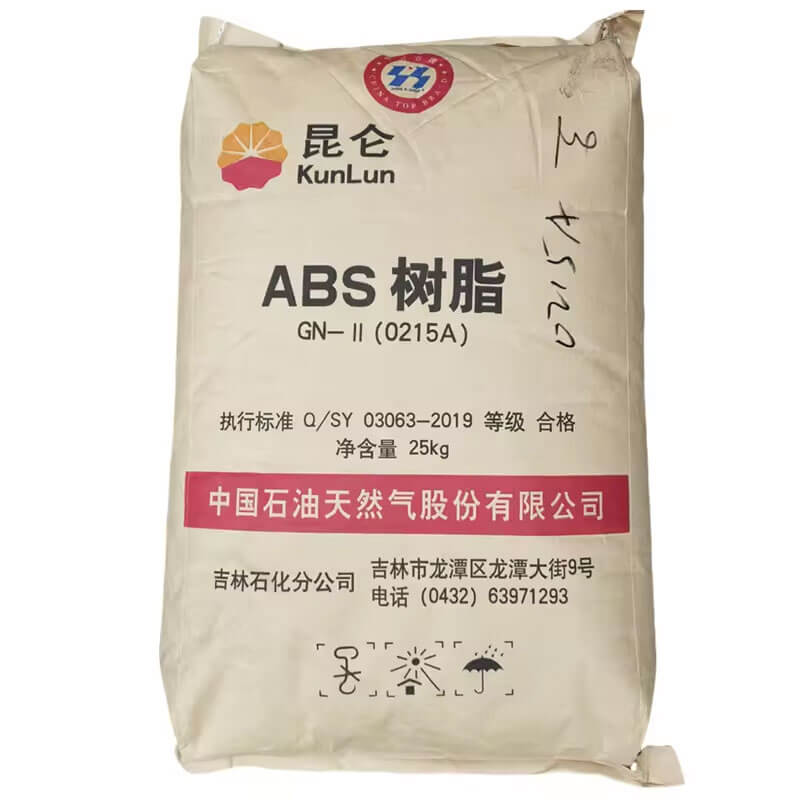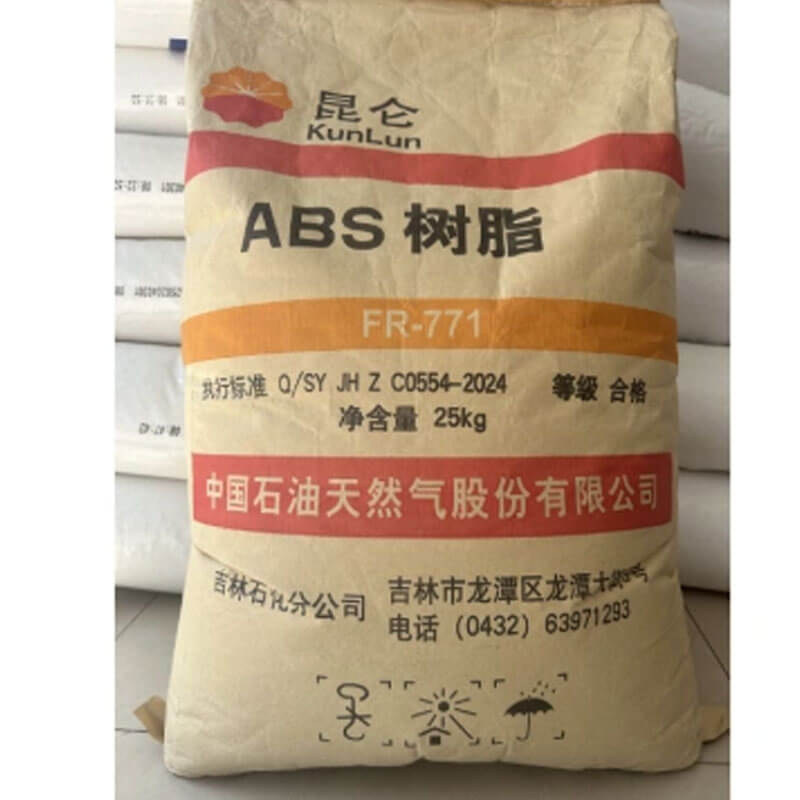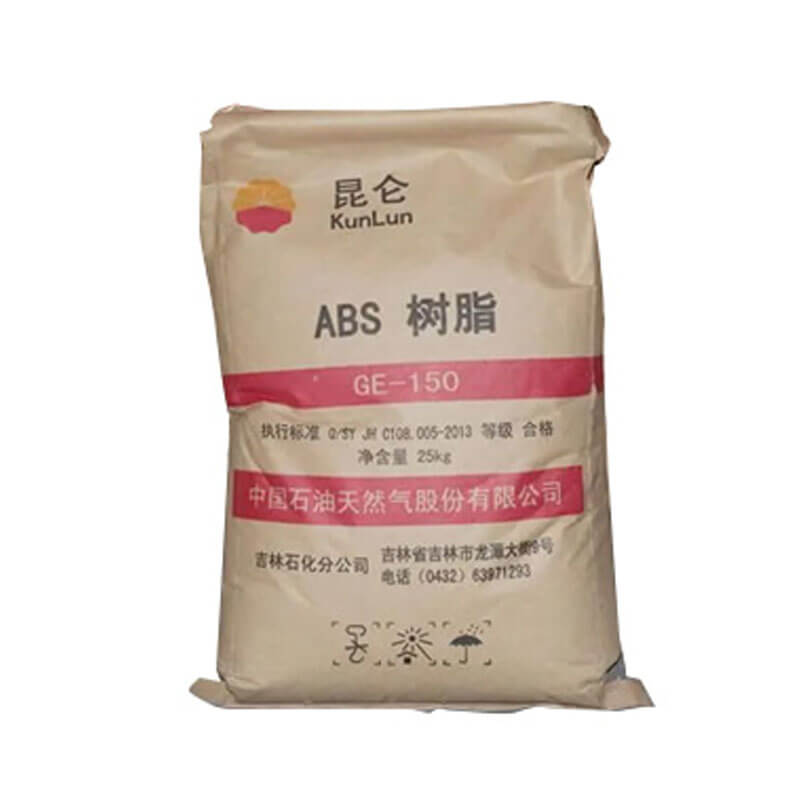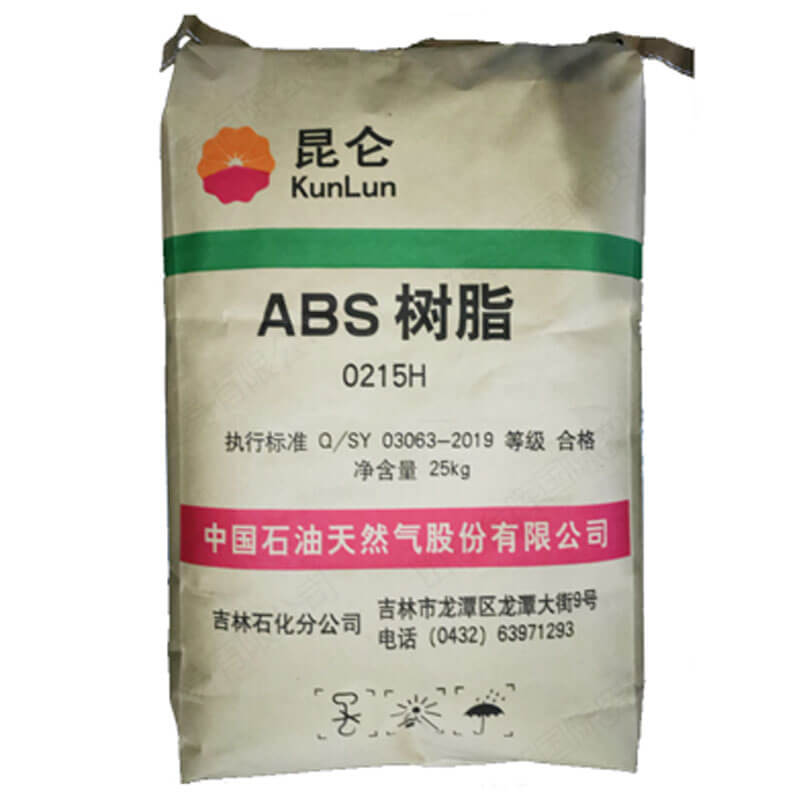
Acrylonitrile‑Butadiene‑Styrene Resin GN‑II (0215A)

    • Product Name: Acrylonitrile‑Butadiene‑Styrene Resin GN‑II (0215A)
    • Factroy Site: No. 9 Longtan Avenue, Jilin City, Jilin Province
    • Price Inquiry: sales4@ascent-chem.com
    • Manufacturer: PetroChina Jilin Petrochemical Company
    • CONTACT NOW
    Specifications
    HS Code 518015
    Density 1.05 g/cm³
    Melt Flow Rate 11 g/10min (220°C, 10kg)
    Tensile Strength 48 MPa
    Elongation At Break 20%
    Flexural Strength 62 MPa
    Flexural Modulus 2200 MPa
    Izod Impact Strength 20 kJ/m² (23°C)
    Rockwell Hardness R-105
    Heat Deflection Temperature 90°C
    Vicat Softening Temperature 102°C

    As an accredited Acrylonitrile‑Butadiene‑Styrene Resin GN‑II (0215A) factory, we enforce strict quality protocols—every batch undergoes rigorous testing to ensure consistent efficacy and safety standards.

    Packing & Storage
    Packing Packed in 25 kg multi-wall paper bags with inner plastic lining, palletized and shrink-wrapped for safe transport and storage.
    Container Loading (20′ FCL) 20′ FCL: bagged ABS resin stowed evenly, secured with dunnage, kept dry, ventilated, away from heat/sparks.
    Shipping Acrylonitrile-Butadiene-Styrene Resin GN-II (0215A) is a non-hazardous thermoplastic granule. Ship in clean, dry, sealed bags or containers to prevent moisture contamination. Avoid excessive heat and open flames. No special dangerous goods labeling required; protect from mechanical damage during transit.
    Storage Store Acrylonitrile-Butadiene-Styrene Resin GN-II (0215A) in a cool, dry, well-ventilated area away from direct sunlight, heat sources, and open flames. Keep containers tightly sealed to prevent moisture absorption and contamination. Avoid contact with strong oxidizers. Maintain moderate temperatures; no special hazard, but observe good warehouse hygiene and first-in, first-out rotation.
    Shelf Life Shelf life is typically two to three years if stored in original sealed packaging, away from moisture, heat, and direct sunlight.
    Application of Acrylonitrile‑Butadiene‑Styrene Resin GN‑II (0215A)

    When 0215A Is Moulded Below 240°C for Automotive Interior Components

    B-pillar lower covers, centre console side panels, glove box surrounds and knee-bolster trim are typically moulded from 0215A at melt temperatures of 220°C to 240°C. The upper temperature limit is not a cosmetic preference but a defined degradation threshold: sustained exposure above 250°C accelerates chain scission in the polybutadiene phase and generates volatile by-products that raise VOC and fogging measurements. Pellets are dried in a desiccant dehumidifying dryer at 80°C to 90°C for 2 h to 4 h to a residual moisture level below 0.08%. If the dryer dew point rises above −20°C, moisture carry-over produces silver streaking around the gate and a measurable gloss reduction on Class A surfaces. Injection fill speed is profiled to prevent shear-induced local temperature rise in undersized sprue and runner systems. Hold pressure from 50 MPa to 80 MPa is maintained until gate freeze-off, while the mould surface is kept at 50°C to 70°C to reproduce grain texture without introducing excessive post-mould shrinkage. Regrind strategy is split by part class: visible interior trim generally receives 0 wt% to 10 wt% closed-loop regrind if VOC and colour drift are monitored, whereas hidden brackets and carrier structures may tolerate up to 30 wt% after notched Izod retention is re-validated according to ISO 180/A. Finished interior parts—B-pillar trims, console side panels, glove box lids and trim strips—are tested for fogging under DIN 75201 or ISO 6452, for organic emissions under VDA 278, and for mechanical property stability under ISO 527-2 and ISO 178.

    Starting-point moulding window for 0215A automotive interior components
    ParameterSettingControl reference
    Desiccant drying temperature80°C to 90°CResidual moisture below 0.08%
    Melt temperature220°C to 240°CDo not exceed 250°C
    Mould temperature50°C to 70°CCavity surface thermocouple
    Hold pressure50 MPa to 80 MPaGate seal time study
    Closed-loop regrind, visible parts0 wt% to 10 wt%VOC and colour drift control

    When enclosure components for flat-panel display frames, set-top boxes, routers and network housings are specified without a flame-retardant requirement, 0215A is injection-moulded at wall thicknesses of 2.0 mm to 3.2 mm. The melt mass-flow rate of the grade, normally reported under ISO 1133-1:2022 at 220°C/10 kg, supports filling of ribs, snap-fit bosses and venting grooves without excessive pack pressure in cold-runner tools. Electrical safety for audio-visual and information technology equipment is evaluated to IEC 62368-1, but this general-purpose ABS is not a flame-retardant compound: unfilled 0215A is typically rated HB at 3.0 mm and must not be substituted when the end-product standard demands V-0 at the same thickness. Surface finishing uses VDI 1224 texture or two-component solventborne coating; aromatic solvents must be validated because the butadiene phase is prone to swell at weld lines and gate regions. For process consistency, non-appearance inner frames and non-load-bearing shields may contain 10 wt% to 20 wt% regrind metered by gravimetric blender, provided that impact retention is checked against ISO 180/A after moulding. Compliance documentation requires RoHS conformity to Directive 2011/65/EU, Annex II, with test screening by IEC 62321-5 for lead, mercury, cadmium and hexavalent chromium, and by IEC 62321-6 for PBB and PBDE. Terminal finished assemblies include monitor bezels, router bottom shells, set-top box covers and television back trim.

    Typical compliance matrix across downstream segments
    SectorStandard/regulationCritical test parameter
    ToysEN 71-3Migration of nineteen elements from toy substrates
    ToysREACH Annex XVII, entries 5152DEHP, DBP, BBP, DIBP below 0.1 wt% in plasticised material
    ElectronicsDirective 2011/65/EU, Annex IIPb, Hg, Cd, Cr(VI), PBB, PBDE
    ElectronicsIEC 62368-1End-product enclosure safety evaluation
    Automotive interiorVDA 278Volatile organic emission and SVOC thermal desorption
    Automotive interiorDIN 75201 / ISO 6452Fogging reflectance

    What Limits Weld-Line Retention in Large Appliance Fascia Parts?

    Large fascia parts such as washing machine control panels, front-load washer top decks, air-conditioner louver assemblies and vacuum cleaner body shells place demanding constraints on multi-gate filling. When two melt fronts meet, the butadiene-rich phase cannot re-entangle across the flow front; notched Izod values at the knit line can fall below 50% of the un-welded value. Gate placement is therefore arranged so that weld lines migrate to low-stress and low-visibility regions, while sequential valve-gate control is preferred for parts longer than 300 mm. Melt temperature is maintained at 220°C to 230°C to depress viscosity at the advancing front without allowing the styrene-acrylonitrile matrix to degrade. The mould surface is kept at 55°C to 70°C on the visible side and 40°C to 55°C on the ejector side to balance gloss and warp. Hot-runner manifold thermal uniformity should not differ by more than ±5°C across drops; a cold drop produces streaks that align with the weld line and become visible after ageing. Colour concentrate for appliance white or light grey is added at 1% to 2% letdown; carrier resin for the masterbatch should be selected from the same ABS family to avoid local viscosity divergence. For internal ribs and snap features, regrind addition is typically kept at 15 wt% to 25 wt% for non-cosmetic zones, but high-gloss surfaces exclude regrind. Finished parts are dimensionally inspected after 24 h conditioning at 23°C/50% RH, and appliance safety is evaluated under IEC 60335-1 with additional ball-pressure requirements applied to current-carrying areas where the substrate may be reclassified as an insulating part.

    For thin-walled building blocks, action figure parts and dollhouse structural shells, 0215A is moulded at wall thicknesses down to 1.2 mm. When wall thickness drops below 1.0 mm, gate freeze-off must be checked with pressure-drop studies rather than residence-time assumptions. Migration of chemical elements from toy substrates is controlled by EN 71-3, which sets limits for nineteen elements including lead, barium, cadmium, chromium(III)/(VI), mercury and organic tin species. The plasticiser restriction under REACH Annex XVII entries 51 and 52 applies to articles intended for children: DEHP, DBP, BBP and DIBP are each restricted to 0.1% by weight of the plasticised material. Production batches are documented with lot-level traceability because toy importers in the supply chain frequently require full test reports from ISO/IEC 17025-accredited laboratories. Mechanical safety is evaluated under EN 71-1 for small parts, drop, torque and tension; ABS snap-fit bosses should be radiused at the root to prevent sharp edges and local stress concentration. Recommended melt temperature for the toy compound is 210°C to 230°C, and regrind for small toy parts is normally limited to 10 wt% or eliminated when migration and colour consistency are part of the supplier specification. Terminal outputs include assemblable building blocks, action figure torsos and limbs, dollhouse frames and role-play sets.

    Electroplated ABS Exterior Badges and the Etching Window

    Electroplated exterior badges, radiator grille covers, rear garnish strips and appliance nameplates are produced from 0215A by a multi-step wet chemistry sequence. The process begins with chromic acid-sulfuric acid etching at 60°C to 70°C for 5 min to 15 min; the etch solution commonly contains 380 g/L to 420 g/L CrO3 and 350 g/L to 450 g/L H2SO4. Preferential dissolution of the butadiene phase creates microcavities that anchor the electroless nickel or copper deposit after palladium-tin activation. Etch ratio is the principal process variable: overetching collapses the SAN matrix and weakens surface hardness, while underetching produces poor peel adhesion. Published data for this specific grade in electroplating configurations are limited, so pre-production etch window trials are required. Moulding defects such as knit lines, jetting, high-shear blush and surface contamination from mould release agents are amplified by the etch bath because the etched surface reflects differences in local butadiene distribution. For electroplated parts, regrind is normally excluded because heat history oxidizes polybutadiene and changes etch selectivity. Plating line operators control palladium activator concentration and electroless nickel temperature within narrow limits, then electrolytic copper, semi-bright nickel, bright nickel and chromium layers are built to automotive exterior corrosion requirements such as ASTM B456-17. The terminal components are electroplated radiator grille surrounds, tailgate garnish assemblies, badge plates and decorative console accents.

    Under repeated drop and vibration loading, power tool housings, battery pack shells and charger bases moulded from 0215A require impact resistance, screw-boss integrity and consistent dimensional output across multi-cavity tools. The polybutadiene phase contributes impact energy absorption at room temperature; performance is validated by notched Izod ISO 180/A or ASTM D256, and end-product drop resistance is commonly assessed under IEC 60068-2-31 or contractor-specific repeated drop protocols. Moulding is carried out at melt temperatures of 220°C to 235°C; higher settings above 240°C produce a noticeable odour in enclosed shop-floor air handling and are avoided. In multi-cavity tools with hot tips, cavity-to-cavity fill imbalance must be kept below 5% by volume or moulded-in stress produces post-assembly cracking at screw bosses. The boss outside diameter is typically 2.0 to 2.5 times the thread-engagement diameter, with a root radius of 0.5 mm to 1.0 mm to reduce stress concentration. Two-shot overmoulding of TPE grips onto ABS is performed in a rotary or indexing mould; the ABS substrate is pre-dried to the same moisture specification, and silicone-based contaminants are excluded because they degrade interfacial adhesion. Regrind is allowed at 20 wt% to 25 wt% for internal frame parts if the plant verifies that impact retention after five heat histories remains within the part specification. The finished assemblies include drill-driver housings, battery pack shells, charger base plates and blower bodies.

    Free Quote

    Competitive Acrylonitrile‑Butadiene‑Styrene Resin GN‑II (0215A) prices that fit your budget—flexible terms and customized quotes for every order.

    For samples, pricing, or more information, please contact us at +8618136850665 or mail to sales4@ascent-chem.com.

    We will respond to you as soon as possible.

    Tel: +8618136850665

    Email: sales4@ascent-chem.com

    Inquiry

    Get Free Quote of PetroChina Jilin Petrochemical Company

    Flexible payment, competitive price, premium service - Inquire now!

    Certification & Compliance
    More Introduction

    Acrylonitrile-Butadiene-Styrene Resin GN-II (0215A) is an opaque rigid thermoplastic composed of a continuous styrene-acrylonitrile phase with dispersed polybutadiene rubber particles. The grade belongs to the general-purpose injection-moulding segment of ABS, where material selection is controlled by melt flow range, dimensional stability, and notched impact resistance at ambient temperature. The 0215A identifier denotes a specific viscosity and impact-modifier balance within the producer’s ABS portfolio. Because published data for this specific configuration is limited, component qualification should be based on the supplier lot certificate rather than generic ABS property tables.

    Specification reviews for this class of ABS commonly reference ASTM D792-20 for density, ASTM D638-14 for tensile properties, ASTM D256-10e1 for notched Izod impact, ASTM D648-18 for heat deflection temperature, and ISO 1133-1:2022 for melt mass-flow rate. General-purpose ABS grades typically exhibit density in the range 1.03–1.07 g/cm³, tensile yield stress between 40 MPa and 50 MPa, and notched Izod impact in the range 150–350 J/m at 23 °C. These are category-typical ranges and do not replace certified lot values for GN-II (0215A).

    GN-II (0215A) is used in technical components requiring moderate heat resistance, dimensional consistency, and acceptable surface quality after painting or metallization. Representative downstream sectors include appliance control panels, business-machine enclosures, automotive interior decorative parts, and electronic housings. The material is not inherently flame-retardant; unmodified ABS normally carries UL 94 HB classification unless a flame-retardant additive system is specified. Continuous service above 85 °C under load should be avoided unless the application-specific HDT under 1.82 MPa has been verified.

    What Processing Barriers Influence GN‑II (0215A) Melt Consistency?

    Moisture control is the first process barrier. The granulate should be dried in a desiccant dryer at 80–90 °C for 2–4 h to reduce moisture to below 0.05 wt%. At warehouse relative humidity above 60 %, pellet surfaces adsorb atmospheric water rapidly, and hopper residence should be limited to avoid splay, silver streaks, and reduced weld-line strength. Drying-air dew point should be verified at -20 °C or lower through the dryer circuit.

    For reciprocating-screw injection moulding, a rising barrel profile from 200 °C at the feed zone to 230–250 °C at the metering zone and nozzle is used. Melt temperature measured at the nozzle should not exceed 260 °C, and residence time above 270 °C should be kept below 5 min to prevent butadiene-phase degradation and yellowing. General-purpose screws with L/D 20:1–24:1 and compression ratio 2.0:1–2.5:1 provide adequate mixing for unmodified GN-II (0215A). For pre-colored or masterbatch-diluted GN-II (0215A), production-scale compounding on a co-rotating twin-screw extruder with L/D 40:1 and side-feeding at the 6D section is used to limit thermal history.

    Lot-release melt flow rate under ASTM D1238-20 at 220 °C and 10.0 kg is the principal comparative parameter. General-purpose injection-moulding ABS grades often fall between 15 g/10 min and 30 g/10 min, but the specific GN-II (0215A) value must be read from the certificate of analysis because rubber content and SAN molecular weight shift the response. Capillary rheometry per ASTM D3835-16 at 220 °C indicates apparent shear viscosity values near 150–400 Pa·s at 1 000 s⁻¹ for typical ABS moulding grades. The exact shear-thinning curve for GN-II (0215A) should be obtained from lot data or measured on a rheometer before designing runner systems for wall thickness below 1.2 mm.

    Commercial differentiation of GN-II (0215A) from high-heat ABS, transparent MABS, and PC/ABS blends is best expressed in terms of thermal, optical, and rheological trade-offs. High-heat ABS grades formulated with α-methylstyrene or maleimide copolymers raise Vicat softening temperature by 10–20 °C but reduce melt flow and require higher barrel temperatures by 10–30 °C. Transparent MABS grades use refractive-index-matched SAN matrices to transmit visible light; total luminous transmittance per ASTM D1003-13 can exceed 80 %, while general-purpose ABS remains opaque because dispersed butadiene particles scatter light. PC/ABS blends offer higher heat distortion and low-temperature impact but demand desiccant drying at 100–120 °C for 4 h, higher melt temperatures, and increased sensitivity to hydrolysis from wet regrind.

    Impact, Thermal, and Rheological Stress Responses

    The notched Izod impact response of ABS reflects the rubber-phase volume fraction and the interfacial grafting of SAN onto butadiene particles. For general-purpose ABS, ASTM D256-10e1 values at 23 °C commonly range from 150 J/m to 350 J/m, with a sharp reduction below the brittle-ductile transition temperature. This transition is moulding-dependent: high melt temperature and rapid injection rates can improve weld-line toughness by preserving rubber domain integrity, while excessive shear may reduce particle size and shift the transition upward.

    Thermal performance is measured by ASTM D648-18 deflection temperature under 1.82 MPa and ISO 306:2013 Vicat softening temperature. General-purpose ABS typically exhibits HDT values from 85 °C to 100 °C and Vicat VST/B50 values from 95 °C to 110 °C. GN-II (0215A) should be qualified only after measuring actual HDT on ejected parts because moulded-in stress, packing pressure, and knit-line geometry shift thermal resistance by 3–7 °C compared with annealed specimens.

    Mould shrinkage for unfilled general-purpose ABS is typically 0.4–0.7 % in the flow direction and 0.4–0.8 % transverse to flow, depending on wall thickness, gate geometry, and holding pressure. The coefficient of linear thermal expansion generally lies between 70 × 10⁻⁶/K and 100 × 10⁻⁶/K per ISO 11359-2:2021. These values support dimensioning of cores and cavities, but they are not unique to GN-II (0215A) and should be confirmed by measurement on the production tool.

    Because certified data for GN-II (0215A) is limited, the following matrix supplies only category-typical ranges for general-purpose ABS injection grades. It must not be used as lot-release limits.

    PropertyMethodTypical general-purpose ABS rangeComponent design consequence
    Melt mass-flow rateASTM D1238-2015–30 g/10 minControls filling of wall sections from 1.2 mm to 3.0 mm
    Notched Izod impactASTM D256-10e1150–350 J/m at 23 °CRejects brittle failure at gates, ribs, and weld lines
    Tensile yield stressASTM D638-1440–50 MPaSets load-bearing limits for snap-fit and threaded bosses
    Heat deflection temperatureASTM D648-1885–100 °C at 1.82 MPaConstrains continuous service temperature
    DensityASTM D792-201.03–1.07 g/cm³Affects part mass and packaging calculations
    Mould shrinkageASTM D955-080.4–0.8 %Determines tool steel dimensional correction

    When Fluid Resistance and Outdoor Stability Exceed ABS Capability

    ABS resins show limited resistance to ketones, esters, aromatic hydrocarbons, and some chlorinated solvents. GN-II (0215A) is not recommended for components exposed to brake fluid, strong acids, or aggressive cleaning agents because these media can induce environmental stress cracking. Stress-cracking resistance should be evaluated under applied strain per ISO 22088-3:2006 or ASTM D1693-15 when the component is in contact with lubricants, paints, or silicone oils. For appliance and automotive interior parts, compatibility with common aliphatic hydrocarbons is generally acceptable but should be validated at 0.5–1.0 % imposed strain.

    Unstabilized ABS is not suitable for long-term outdoor exposure. Ultraviolet radiation degrades the butadiene phase and causes yellowing, chalking, and impact loss. If outdoor use is specified, a coextruded ASA cap layer or stabilizer package is required. GN-II (0215A) should not be compared with ASA or ASA/PC grades under ISO 4892-2:2013 weathering unless such protection has been qualified.

    Unmodified ABS is not inherently flame-retardant. Under UL 94 vertical testing, general-purpose ABS usually does not achieve V-0 without additive modification. Electronic enclosure applications requiring V-0 at wall thickness 1.5 mm should specify a flame-retardant ABS variant rather than GN-II (0215A) unless a recognized flame-retardant masterbatch is validated on the production tool.

    Regulatory compliance for GN-II (0215A) should be verified against the supplier declaration because additive systems vary by production campaign. The RoHS Directive 2011/65/EU restricts lead, mercury, cadmium, hexavalent chromium, PBB, and PBDE; ABS suppliers typically supply declarations tested according to IEC 62321-5:2013 for cadmium and IEC 62321-7-1:2015 for hexavalent chromium. REACH Regulation (EC) No 1907/2006 requires substance-of-very-high-concern screening, and the absence of SVHCs above 0.1 wt% per article is usually confirmed on the safety data sheet. For food-contact applications, migration testing under regional food-contact legislation is required; no general-purpose ABS should be assumed compliant without a specific declaration because residual styrene, acrylonitrile, and 1,3-butadiene monomers are governed by migration limits.

    RequirementStandard or methodTypical acceptance thresholdGN-II (0215A) status verification
    RoHS restricted substancesIEC 62321 series0.1 wt% Pb, Hg, Cr(VI), PBB, PBDE; 0.01 wt% CdSupplier declaration per batch
    REACH SVHCREACH (EC) No 1907/20060.1 wt% per articleSDS screening required
    FlammabilityUL 94HB unless flame-retardant variantUnmodified GN-II (0215A) typically HB
    Moisture content before processingDesiccant dryer verification0.05 wt% maximumMust be measured at hopper inlet

    On a production-scale reciprocating-screw injection machine with clamp force of 1 200 kN producing enclosures of 2.5 mm nominal wall thickness, shot-mass variation caused by granulate bridging in the hopper can exceed ±0.3 % across batches. This is sufficient to alter cushion position and flash formation. Processors should therefore require a lot-specific certificate for GN-II (0215A) and confirm the presence, type, and loading of processing aids or stabilizers before committing a validated production run.