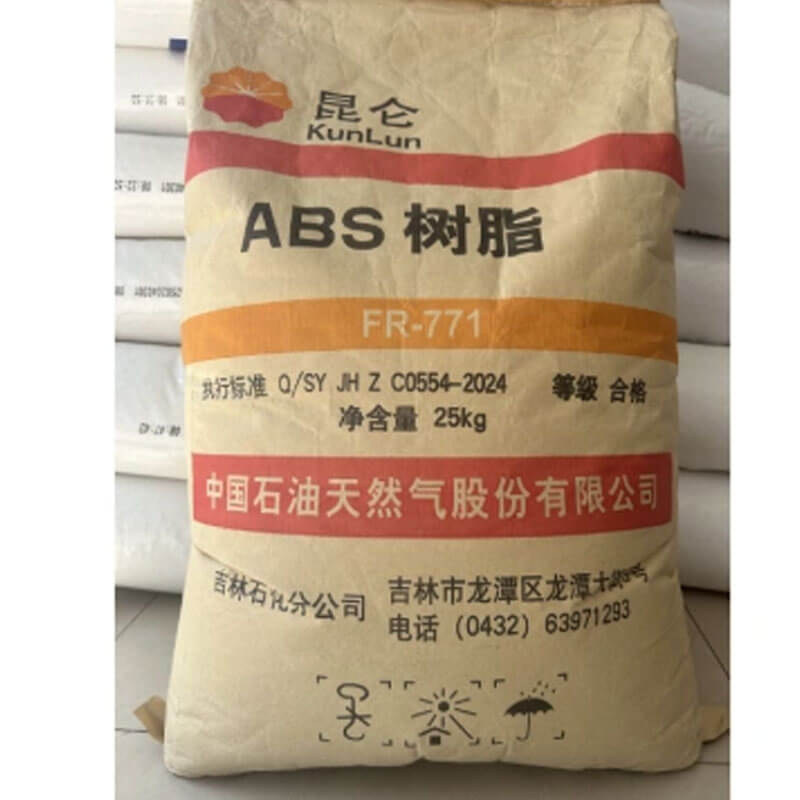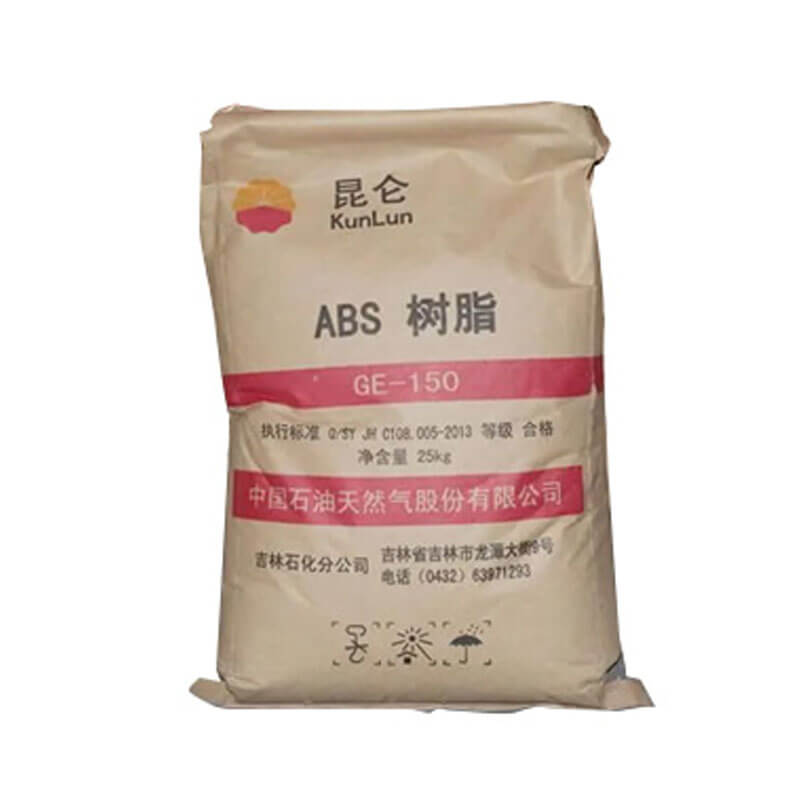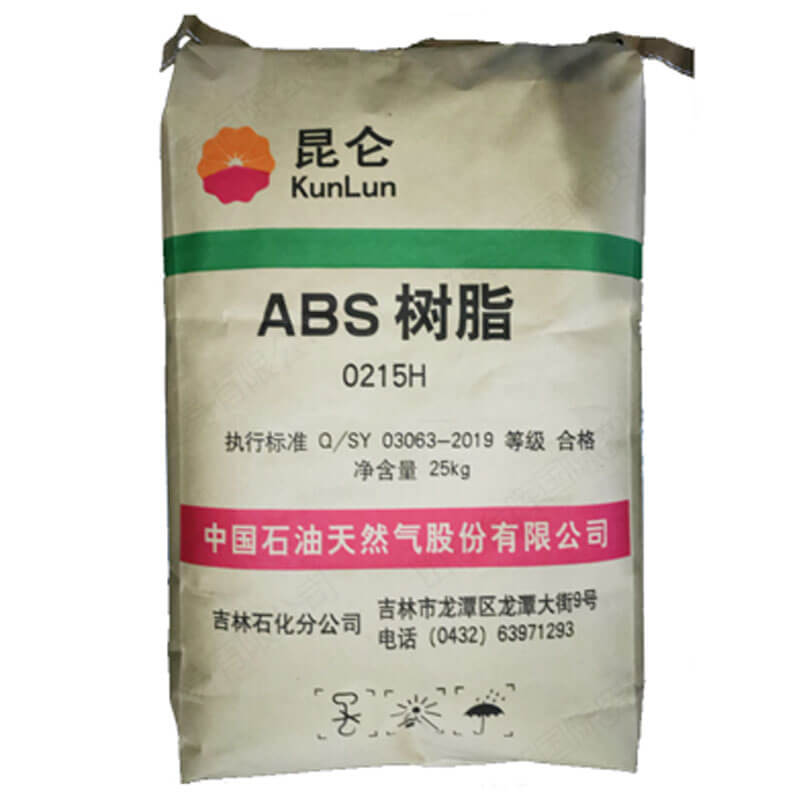
Styrene‑Acrylonitrile Copolymer SAN‑2437

    • Product Name: Styrene‑Acrylonitrile Copolymer SAN‑2437
    • Factroy Site: No. 9 Longtan Avenue, Jilin City, Jilin Province
    • Price Inquiry: sales4@ascent-chem.com
    • Manufacturer: PetroChina Jilin Petrochemical Company
    • CONTACT NOW
    Specifications
    HS Code 495627
    Density 1.07 g/cm³
    Melt Flow Rate 200 C 5 Kg 1.5 g/10 min
    Tensile Strength Yield 70 MPa
    Elongation At Break 3%
    Flexural Modulus 3.6 GPa
    Flexural Strength 100 MPa
    Izod Impact Strength Notched 23 C 20 J/m
    Heat Deflection Temperature 1 8 Mpa 90 °C
    Vicat Softening Temperature 50 N 107 °C
    Rockwell Hardness M85
    Light Transmittance 1 Mm 88%
    Refractive Index 1.53
    Volume Resistivity 10^15 Ω·cm
    Dielectric Strength 15 kV/mm
    Water Absorption 24 H 0.25%
    Mold Shrinkage 0.4-0.7%

    As an accredited Styrene‑Acrylonitrile Copolymer SAN‑2437 factory, we enforce strict quality protocols—every batch undergoes rigorous testing to ensure consistent efficacy and safety standards.

    Packing & Storage
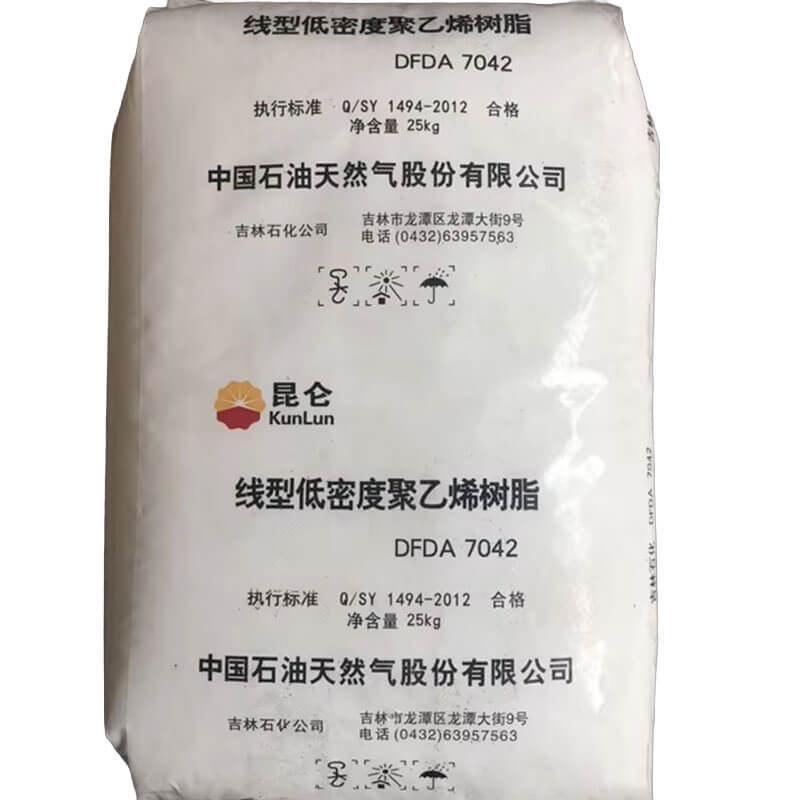
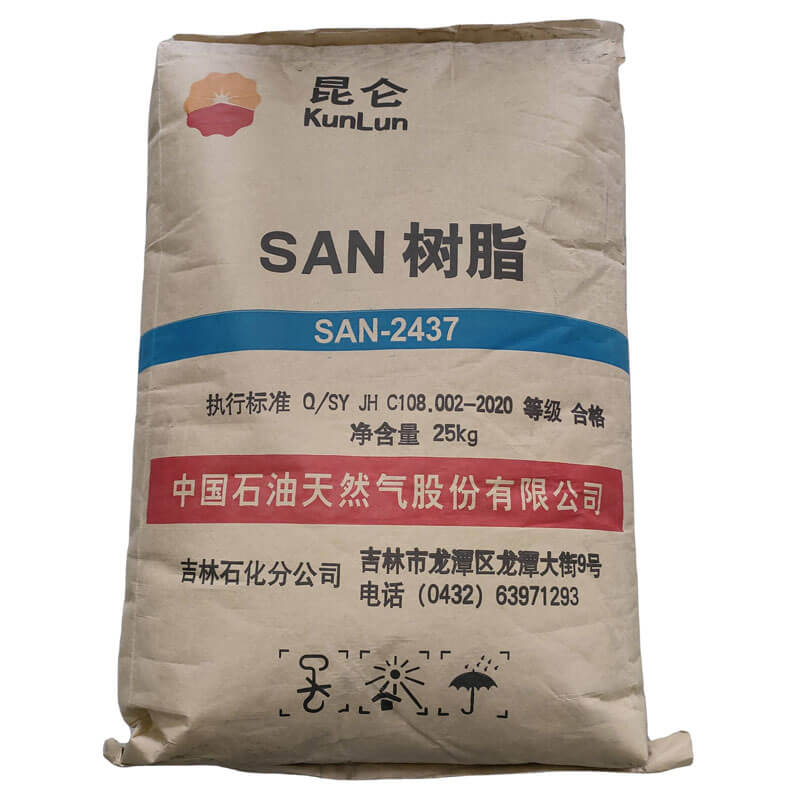
    Packing Styrene-Acrylonitrile Copolymer SAN-2437 is supplied in sealed, moisture-proof 25 kg bags, ensuring safe handling and storage.
    Container Loading (20′ FCL) Container Loading (20′ FCL): Styrene-Acrylonitrile Copolymer SAN-2437 is loaded in palletized bags, properly secured, with ventilation to prevent moisture and damage.
    Shipping Styrene-Acrylonitrile Copolymer SAN-2437 ships as a non-hazardous granular solid in sealed polyethylene-lined bags, super sacks, or hopper trucks. Keep dry, avoid moisture and extreme heat, and store away from oxidizers. No special transport classification required under standard shipping regulations.
    Storage Store Styrene-Acrylonitrile Copolymer SAN-2437 in a cool, dry, well-ventilated area away from direct sunlight, heat, and ignition sources. Keep containers tightly closed to prevent moisture absorption and contamination. Avoid contact with strong oxidizers, acids, and bases. Maintain moderate temperatures, and ensure no dust accumulation. Use proper labeling and segregation from incompatible materials.
    Shelf Life Store in a cool, dry area in original sealed container. Shelf life is typically two years from manufacture date.
    Application of Styrene‑Acrylonitrile Copolymer SAN‑2437

    Melt-filtered styrene-acrylonitrile copolymer of the SAN-2437 type is processed as an amorphous, transparent resin with an acrylonitrile content in the range of 24–30 wt%. In instrument cluster lens production, the material is evaluated where polymethyl methacrylate exhibits environmental stress cracking after repeated contact with aerosolized plasticizer emitted from surrounding PVC skin and alkaline glass-cleaning solutions. Published data for this specific configuration is limited; the following processing boundaries are drawn from general SAN copolymer behavior, injection molding production logs, and automotive interior optical component validation protocols.

    Automotive interior optical components require compliance with FMVSS 302 / ISO 3795 for horizontal burn rate, SAE J2412 with xenon-arc exposure at 0.55 W/m²/nm at 340 nm to a total radiant exposure of 1,200 kJ/m², ISO 4892-2 for weathering, VDA 270 for odor rating no higher than 3, and VDA 275 for gravimetric fogging below 2 mg. The formulation for tinted lens compounds is 100 parts by weight SAN, 0.3–0.6 phr benzotriazole UV absorber, 0.1–0.3 phr hindered amine light stabilizer, 0.05–0.15 phr internal mold release, and 0.8–1.5 phr solvent-soluble color concentrate. UV absorber addition above 0.6 phr increases plate-out on mold surfaces without proportionally improving weathering; below 0.3 phr, yellowness index exceeds 3.0 after 1,200 kJ/m².

    Injection molding is performed on hydraulic machines with clamp force calculated at 3.5–5.0 kN/cm² of projected area. Barrel settings are rear 210–220°C, center 225–235°C, front 235–245°C, nozzle 240–250°C. The screw has an L/D ratio of 22:1–25:1 and a compression ratio of 2.0–2.5:1. Back pressure is maintained at 0.8–1.5 MPa, and screw speed is limited to 60–90 rpm. Predrying at 80°C for 4 h to less than 0.05% moisture is mandatory; processing without drying at relative humidity above 60% produces splay and optical haze. Valve-gated hot runners with sequential filling reduce weld-line visibility in the lens center. Pack pressure of 60–80 MPa is applied for 1.5–3.0 s, followed by hold pressure of 40–50 MPa. On a 250-ton hydraulic press with a two-cavity lens tool, screw speeds above 120 rpm produced localized yellowing at the sprue due to shear heating; reducing screw speed and increasing barrel rear temperature by 5°C eliminated the defect without extending cycle time.

    Finished part geometries include instrument cluster lenses, HVAC control display windows, trip computer faces, shift indicator lenses, interior lamp diffusers, and rear-seat control bezel windows. The resin is not specified for exterior lens applications because prolonged UV exposure without a polysiloxane hardcoat produces unacceptable haze development beyond 1,500 kJ/m².

    Does Impact Modification Compromise Clarity in Dishwasher-Safe Blender Jar Applications?

    Blender jars and other food-contact appliance components are molded from SAN where resistance to tomato oil, citrus oil, and dilute detergent at 65°C is required in repeated dishwasher cycles. The critical design conflict is between drop-impact performance and optical clarity. Unmodified SAN has notched Charpy impact energy around 2.0 kJ/m², which is borderline for a 1.0 m drop onto ceramic tile; acrylic impact modifier addition raises impact energy but reduces total luminous transmittance. Published data for this specific configuration is limited; the table below reports representative values for impact-modified SAN food-contact grades.

    Acrylic impact modifier content (wt%)Charpy notched impact ISO 179-1/1eA (kJ/m²)Tensile strength ISO 527-2/1A (MPa)Total luminous transmittance ASTM D1003 (%)Haze ASTM D1003 (%)
    02.072901.5
    33.566882.0
    65.059843.5

    Food-contact compliance is governed by FDA 21 CFR 177.1040, EU 10/2011 with overall migration below 10 mg/dm², EN 60335-1, UL 94 HB, and NSF/ANSI 51 for food equipment materials. Formulation addition ratios are 100 parts virgin SAN, 3–6 wt% acrylic impact modifier for jars requiring drop resistance, 0.1 phr maximum high-purity internal lubricant, and no external silicone lubricant because migration during hot wash cycles creates selective deposition on seal areas. For refrigerator crisper drawers, the resin is used unreinforced at 100% virgin content, with total luminous transmittance above 85% and haze below 3.0% according to ASTM D1003.

    Downstream processing for blender jars uses injection molding at 4.0–5.0 mm nominal wall. Melt temperature is 230–240°C, mold temperature 60–70°C, screw L/D 25:1, compression ratio 2.0–2.2:1. A two-stage injection profile fills the cavity at 80–120 mm/s to 90% of volume, then applies pack/hold pressure of 70–90 MPa for 4–6 s at the thick threaded neck. Predrying at 80°C for 4 h to 0.05% moisture is required; at relative humidity above 60%, incomplete drying caused internal bubbles at the thread root and a scrap rate of approximately 15% in production runs. Batch-to-batch melt mass-flow rate variation is controlled within ±8% under ISO 1133-1:2022 at 220°C/10 kg; wider variation shifts the pack-pressure window by 5 MPa and produces short shots at the same switchover position. For blow-molded jars, a continuous shuttle machine with parison die temperature 220–230°C, mold temperature 40–60°C, blow pressure 0.6–0.8 MPa, and parison programming to maintain wall thickness at 4.5–5.5 mm is employed. Post-mold annealing at 65°C for 30 min reduces molded-in stress at the thread root by approximately 30–50% and extends dishwasher survival from 150 cycles to more than 300 cycles in in-house testing.

    Finished product types include blender jars, food processor bowls, refrigerator crisper drawers, water dispenser reservoirs, salad spinner bowls, and clear kitchen appliance attachments. Components with thick threaded closures, snap-fit lids, and translucent bases are produced from the same resin family, but regrind content above 20 wt% is not recommended due to molecular weight reduction and increased stress-cracking sensitivity.

    Fragrance-Induced Environmental Stress Cracking in Thick-Wall Cap Geometry

    Thick-wall cosmetic closures and jar sidewalls are injection molded from SAN because of Rockwell M hardness of 80–85 measured under ISO 2039-1, gloss retention above 90% under ISO 2813 after repetitive opening torque, and chemical resistance to ester-based emollients. The dominant failure mode is environmental stress cracking caused by fragrance solvents trapped in the closure headspace after capping. In this geometry, molded-in tensile stress at the thread undercut combines with solvent uptake from fragrance base containing 20–30% diethyl phthalate and 15–20% benzyl acetate.

    Applicable compliance obligations include EU 1223/2009 for cosmetic product safety, EU 94/62/EC packaging heavy metals with a total lead, cadmium, mercury, and hexavalent chromium limit of 100 mg/kg, REACH 1907/2006, and USP <661> for plastic packaging where the brand owner applies this pharmacopeial standard. Formulation addition ratios are 100 parts SAN; opaque cap formulations add 1.5–3.0 wt% titanium dioxide polymer masterbatch; pearlescent versions add 0.8–2.0 wt% mica-based effect pigment; internal mold release is 0.2–0.4 wt%. External silicone lubricant is avoided because it migrates to the sealing surface and alters cap removal torque. In transparent thick-wall jars, 0.1–0.2 wt% optical brightener is used only when a blue-white tone is required; above 0.2 wt%, visible fluorescence appears under retail point-of-sale lighting, causing color mismatch with adjacent components.

    Downstream injection molding uses a reciprocating screw with L/D 22:1 and compression ratio 2.0–2.5:1. Barrel temperatures are 220–240°C, hot runner manifold 240–245°C, mold temperature 50–65°C. For caps with 8.0–12.0 mm wall thickness at the thread boss, cooling time is 30–45 s. Injection speed is profiled at 45–60 mm/s for the first 70% of fill, then reduced to 30–40 mm/s to avoid jetting at the logo embossment. Packing pressure of 55–70 MPa is applied for 1.5–2.5 s after screw-position switchover. Annealing at 60°C for 30 min reduces molded-in stress at the thread undercut by approximately 25–40%. Production-scale testing showed that unannealed caps developed radial cracks after 7 days of direct contact with the fragrance base described above; annealed caps exceeded 30 days without fracture under identical load and temperature conditions.

    Finished product types include fragrance caps, skincare jar bodies, lipstick sleeves, airless dispenser covers, compact cases, and overcap shells. The resin is not recommended for continuous immersion in pure ethanol greater than 30% concentration or for pressurized aerosol containers where sustained hoop stress exceeds the environmental stress cracking threshold.

    Where non-sterile transparent diagnostic consumables are molded in cleanroom conditions, SAN is specified over general-purpose polystyrene for lower total organic carbon in aqueous extraction under ISO 10993-12 and better resistance to 70% isopropanol used in lateral flow reagent wash buffers. The material is not appropriate for gamma-sterilized primary medical devices, because a cumulative dose of 25 kGy induces yellowing and reduces notched impact strength. The following diagnostic application boundaries focus on non-sterile, single-use items that do not require terminal sterilization.

    Compliance testing for patient-contact diagnostic consumables includes ISO 10993-5 cytotoxicity, ISO 10993-12 extraction procedures, USP <661> plastic packaging characterization, ISO 13485 for manufacturing quality systems, REACH 1907/2006, and RoHS 2011/65/EU. Formulation addition ratios are 100 parts virgin resin without regrind; antistatic additive is 0.5–1.2 wt%; flow enhancer is 0.1–0.3 wt% for thin sensor windows of 1.0–1.2 mm wall. External mold release is prohibited because mold release agents increase extractables and interfere with reagent adhesion. When antistatic loading was raised from 0.8 wt% to 1.2 wt%, mold cleaning interval dropped from 8,000 to 5,000 cycles due to plate-out on cavity surfaces; the lower loading provided adequate static decay without measurable discharge defects.

    Downstream processing uses electric injection molding machines in ISO 14644-1 Class 8 or better. Barrel temperatures are 215–235°C, mold temperature 50–65°C, screw L/D 22:1, screw speed 50–80 rpm, back pressure 0.5–1.0 MPa. Predrying is performed at 80°C for 4 h to 0.03% moisture. Cavities are arranged in 8–16 drops with hot runner pneumatic valve gates. Process capability is monitored through injection pressure peak variation; a pressure peak increase above 120 MPa indicates gate freezing or melt temperature drift, and triggers purging before dimensional drift exceeds 0.05 mm on the cuvette optical path length.

    Finished product types include spectrophotometer cuvettes, lateral flow cassette housings, microplate covers, transparent reagent reservoirs, and sample cups for clinical analyzers. If terminal sterilization becomes required, electron beam or ethylene oxide should be validated; gamma irradiation at 25 kGy increases yellowness index by 4–6 units and is outside the recommended operating envelope.

    If PMMA Is Too Brittle for Snap-Fit Transparent Cover Assemblies

    Transparent covers in small appliances and consumer electronics require a balance of rigidity, snap-fit ductility, and resistance to hand oils and dilute cleaning agents. PMMA often fails at snap-fit tabs with thickness below 1.5 mm; SAN provides higher elongation at break and better chemical resistance, at the cost of lower surface hardness, typically F–H versus H–3H under ISO 15184, and lower exterior UV durability. In indoor applications with moderate UV exposure from fluorescent lighting, this trade-off is acceptable.

    Electrical and electronic enclosure compliance includes UL 94 HB at 1.5 mm, IEC 62321-3-1 for RoHS substance screening, RoHS 2011/65/EU, IEC 60335-1 for household electrical appliances, and ISO 11469 polymer identification marking. Formulation addition ratios are 100 parts SAN; UV stabilizer masterbatch 0.2–0.5 wt% for indoor exposure; antistatic compound 0.5–1.5 wt%; color masterbatch 0.5–1.5 wt%. For opaque structural covers requiring higher creep resistance, glass fiber reinforcement at 10–15 wt% is used, but total luminous transmittance falls below 5%; this is only applicable where transparency is not a functional requirement.

    Thin-wall injection molding uses wall thickness of 1.2–2.0 mm. Melt temperature is 235–245°C, mold temperature 55–65°C, injection velocity 150–250 mm/s, switchover at 95% of shot volume, pack pressure 70–100 MPa for 0.5–1.5 s. Hot runner valve gates with 0.8–1.5 mm gate diameter are standard. On a 220-ton electric machine running a two-cavity vacuum cleaner dirt receptacle tool, reducing wall thickness from 2.5 mm to 1.8 mm improved cycle time by 18% but required pack pressure increase from 75 MPa to 95 MPa to eliminate sink marks at snap-fit bosses. The process window for pack pressure is ±5 MPa; below that band, sink marks exceed 2.0 µm depth under grazing light; above that band, parting-line flash occurs. Production monitoring of switchover position within ±0.3 mm is required to maintain gate seal and avoid short shots in thin sections.

    Finished product types include vacuum cleaner transparent dirt receptacles, air purifier front panels, control panel display covers, printer scanner windows, appliance knob bodies, and power tool battery monitoring windows. The resin is not specified for outdoor enclosures because UV exposure above 1,000 h in ISO 4892-2 causes measurable yellowing without a hardcoat.

    Pressure-bearing water filter sump housings are injection molded from SAN when chlorinated potable water resistance, transparency, and creep resistance under cyclic hydrostatic pressure are required. The application is limited to cold-water service; continuous exposure above 50°C reduces hoop stress capacity and accelerates environmental stress cracking at thread roots.

    Drinking water contact compliance includes NSF/ANSI 42 and NSF/ANSI 61 for chemical extractables and material safety, EU 10/2011, REACH 1907/2006, and RoHS 2011/65/EU. Formulation addition ratios are 100 parts SAN; short glass fiber 10–20 wt% is used in structural sump bodies when operating pressure exceeds 4 bar. Transparent bowl portions remain unreinforced but require annealing. Internal release is 0.1–0.3 wt%; no antistatic amine additives are used because drinking water contact excludes amine-based migrating species. External lubricants are not used on molded threads because they alter the coefficient of friction and can cause over-torquing during filter cartridge replacement.

    Reinforced compounds are produced on a co-rotating twin-screw extruder with L/D 32:1, side feeding glass fiber at zone 4, vacuum vent in zone 8 at -0.08 MPa, screw speed 350–450 rpm, and melt temperature 240–260°C. The compounded pellets are predried at 80°C for 4 h to 0.05% moisture before injection molding. Downstream injection molding processes thick-walled sumps and bowls at 4–6 mm nominal wall. Melt temperature is 240–250°C, mold temperature 60–75°C, screw L/D 20:1–25:1, back pressure 0.5–1.0 MPa, hold pressure 80–100 MPa for 5–8 s. Cooling time is 45–60 s due to section thickness. Post-molding annealing at 65–70°C for 30–60 min relieves hoop stress in threaded closures. Production-scale cyclic testing with hydrostatic pressure from 0 to 6 bar showed unannealed glass-filled sumps cracked circumferentially at the thread root after approximately 2,000 cycles; annealed components exceeded 10,000 cycles without leakage or structural failure. Batch release testing uses pressure decay leakage at 4 bar for 30 s and visual inspection under polarized light for residual stress concentrations.

    Finished product types include water filter sumps, filter bowls, shower head housings, inline filter covers, and irrigation sight glasses. Components are not suitable for hot-water service above 50°C or for direct exposure to concentrated oxidizing acids.

    Related Articles
    Free Quote

    Competitive Styrene‑Acrylonitrile Copolymer SAN‑2437 prices that fit your budget—flexible terms and customized quotes for every order.

    For samples, pricing, or more information, please contact us at +8618136850665 or mail to sales4@ascent-chem.com.

    We will respond to you as soon as possible.

    Tel: +8618136850665

    Email: sales4@ascent-chem.com

    Inquiry

    Get Free Quote of PetroChina Jilin Petrochemical Company

    Flexible payment, competitive price, premium service - Inquire now!

    Certification & Compliance
    More Introduction

    Styrene‑Acrylonitrile Copolymer SAN‑2437 is a random amorphous copolymer of styrene and acrylonitrile with CAS registry number 9003-54-7. The acrylonitrile comonomer content is controlled within 28–31 wt%. The grade is supplied as cylindrical pellets and is specified as a medium-flow transparent injection moulding material. Under ISO 1183-1:2019, density is 1.08 g/cm³. Under ISO 1133-1:2022 at 220 °C and 10 kg, the melt volume-flow rate is typically 25 cm³/10 min with a batch-to-batch tolerance of ±2 cm³/10 min. Residual acrylonitrile monomer is controlled below 1.0 mg/kg by headspace gas chromatography; residual styrene monomer is controlled below 500 mg/kg. The nitrile group raises the Vicat softening temperature to 106 °C under ISO 306:2022 method VST/B50 and produces a tensile yield stress of 72 MPa under ISO 527-2:2012. The material is intended for moulding and extrusion operations that require optical clarity, rigidity, and resistance to aliphatic hydrocarbons.

    Typical property envelope for SAN‑2437
    PropertyTest methodValue
    Melt volume-flow rateISO 1133-1:2022, 220 °C/10 kg25 cm³/10 min
    DensityISO 1183-1:20191.08 g/cm³
    Tensile yield stressISO 527-2:201272 MPa
    Tensile modulusISO 527-2:20123,600 MPa
    Flexural strengthISO 178:2019110 MPa
    Flexural modulusISO 178:20193,700 MPa
    Charpy notched impact strength, 23 °CISO 179-1:20232.5 kJ/m²
    Vicat softening temperature VST/B50ISO 306:2022106 °C
    Heat deflection temperature HDT/A, 1.82 MPaISO 75-2:2020101 °C
    Light transmittance, 3.2 mm plaqueASTM D1003-2189%
    Haze, 3.2 mm plaqueASTM D1003-211.0%

    What Distinguishes SAN‑2437 from GPPS and Transparent ABS Grades?

    Relative to general-purpose polystyrene, SAN‑2437 exhibits higher tensile yield stress, greater resistance to stress cracking in aliphatic hydrocarbon environments, and higher heat deflection temperature. The nitrile group raises HDT/A to 101 °C under ISO 75-2:2020, whereas GPPS typically falls near 85 °C. The notched Charpy impact strength remains low at 2.5 kJ/m², which is similar to GPPS and indicates that the grade is not a direct substitute for ABS in energy-absorbing structures. Compared to a transparent ABS or MABS grade, SAN‑2437 has lower notched impact strength, typically below one-fifth of the 12–20 kJ/m² range reported for transparent ABS, but offers better resistance to oxidative yellowing after repeated melt processing and lower density. The optical advantage is light transmittance of 89% on a 3.2 mm plaque with haze below 1.0% under ASTM D1003-21; transparent ABS grades often show haze above 2.0% at the same thickness. The chemical resistance difference is substantial in household cleaning agents. SAN‑2437 withstands short-term contact with aliphatic solvents and dilute acids, whereas GPPS whitens and stress-cracks under the same exposure. The grade is not resistant to ketones, chlorinated solvents, or aromatic hydrocarbons; these solvents dissolve or swell the copolymer.

    Within the SAN product family, the 2437 designation identifies a medium-flow grade with higher melt volume-flow rate than low-flow, high-heat SAN grades that are typically specified below 10 cm³/10 min at 220 °C/10 kg. The higher flow reduces filling pressure in multi-cavity moulds but increases thermal sensitivity because the molecular weight distribution is shifted toward lower molar mass. Low-flow SAN grades are preferable for thick-wall structural parts that require maximum heat resistance and lower shear heating; medium-flow grades are preferred for complex components with long flow paths and wall thickness below 2.5 mm. The exact pressure difference cannot be transferred from generic SAN data and should be verified on the target mould.

    Pre-drying is performed in a desiccant dryer at 80 °C for 4 h to reduce absorbed moisture below 0.05%. At moisture levels above 0.10%, hydrolysis of acrylonitrile sequences liberates ammonia and produces splay, silver streaking, and surface haze in transparent parts. Melt temperature is maintained between 220 °C and 260 °C. Barrel flat-temperature profiles from hopper to nozzle are recommended, with rear zone 200–220 °C, middle zone 220–240 °C, front zone 230–250 °C, and nozzle 240–260 °C. Mold temperatures are set between 30 °C and 70 °C. Higher mold temperatures improve flow-line disappearance and surface gloss but extend cycle time. Hot-runner systems should use externally heated manifolds with open-pipe nozzles; internal mixing nozzles are not recommended because the melt is sensitive to stagnation. Gate land length should not exceed 1.5 mm for side gates in parts with wall thickness 2.0–3.0 mm. Vent depth should not exceed 0.03 mm to avoid flash while allowing volatile emission.

    Injection Moulding Equipment and Process Boundaries for SAN‑2437

    On production-scale injection moulding machines, the grade is typically processed with a general-purpose three-zone screw having an L/D ratio of 20:1–24:1 and a compression ratio of 2.5:1–3.0:1. Clamping force requirements are 400–600 kN per 100 cm² of projected area when melt temperature and injection speed are set to permit a filling time of 0.5–1.5 s for thin-walled parts. Injection velocity is set in the range 50–100 mm/s depending on cavity thickness; excess velocity above 120 mm/s can generate shear heating and yellowing streaks. Holding pressure is applied at 60–70% of peak injection pressure for 2–6 s per millimetre of wall thickness. Back pressure of 0.5–1.0 MPa is sufficient for homogeneous melt temperature; higher back pressure increases residence time and promotes thermal decomposition. Screw rotation speed is limited to 50–80 rpm to limit frictional heat. At 260 °C, residence time should not exceed 8 min, and at 250 °C total residence time should remain below 12 min to avoid visible yellowing from dehydrocyanation. Purging with GPPS or a styrene-based purging compound is recommended before shutdown and when changing from polycarbonate or polymethyl methacrylate. The purging sequence should avoid direct transitions from PVC or acetal because degradation products from these resins can contaminate the nitrile-containing melt.

    Flow simulation of transparent parts should account for shear-thinning behavior. The viscosity at 250 °C and 1,000 s⁻¹ is approximately 180 Pa·s; at 100 s⁻¹ it rises to 600 Pa·s. Weld lines in transparent parts appear as visible haze lines because acrylonitrile sequences at the flow front form a skin with lower refractive index. To minimise weld-line visibility, gate locations are arranged so that flow fronts meet in non-visible rear walls or ribs. The use of sequential valve-gate systems is possible but requires the hold pressure to be adjusted 10–15% lower at the second gate to avoid burn marks. For living hinges, SAN‑2437 is not recommended because the copolymer has insufficient fatigue resistance; polypropylene or thermoplastic elastomer grades are required.

    When Moisture Exceeds 0.10% Prior to Melt Processing

    If the pellets are stored at relative humidity above 60% without sealed containers, absorbed moisture can exceed 0.10% within 24 h. In this condition, the melt-phase hydrolysis of acrylonitrile units produces ammonia and carboxamide intermediates, which lead to splay and adhesion loss at the part surface. Dehumidifying hopper dryers with dew point of -30 °C or lower are required. A closed-loop material-handling system is recommended for central conveying distances greater than 10 m to prevent moisture re-entry. If splay persists after correct drying, the cause is often resin degradation from a previous start-up or a hot spot in the barrel; in such cases the barrel temperature uniformity should be verified with a contact thermocouple and the screw pulled only after the barrel is purged. The pellet moisture can be checked with Karl Fischer titration under ISO 15512:2019, and the maximum permitted moisture is 0.05%.

    For food-contact use, compliance must be verified against FDA 21 CFR 177.1640 for styrene‑acrylonitrile copolymers and the relevant migration limits under European Regulation (EU) No 10/2011. The grade is not automatically approved for food contact; finished articles must be tested for residual acrylonitrile migration below the specific migration limit of 0.02 mg/kg food simulant. For electrical and electronic equipment, the product falls under Directive 2011/65/EU restriction of hazardous substances and requires documentation of lead, mercury, cadmium, hexavalent chromium, PBB, and PBDE content below the homogeneous-material thresholds. REACH SVHC compliance is documented for the pellet as supplied, but downstream converters are responsible for finished-article obligations under Regulation (EC) No 1907/2006.

    Regulatory and standards matrix
    RequirementStandard / regulationTypical status for SAN‑2437
    Food contact resinFDA 21 CFR 177.1640Meets specification; article migration testing required
    EU food contactRegulation (EU) No 10/2011Article-specific migration verification required
    RoHS restricted substancesDirective 2011/65/EUBelow homogeneous-material thresholds
    REACH SVHCRegulation (EC) No 1907/2006No SVHC above 0.1% w/w
    Moisture determinationISO 15512:20190.05% before melt processing
    Flammability classificationUL 94HB classification typical for unpigmented grade

    Transparent rigid components are moulded from SAN‑2437 for cosmetic packaging, refrigerator interior accessories, air-conditioner indicator panels, and small appliance lenses. The grade is chosen when polycarbonate is excluded for cost or processing reasons and when GPPS lacks the required chemical resistance against cosmetic esters and mineral oils. Cosmetic packaging closures moulded from SAN‑2437 show improved environmental stress crack resistance against alcohol solutions up to 30% ethanol by volume compared with GPPS, although long-term contact with ethanol above 50% by volume is not recommended. In washing machine control panels, the combination of 101 °C HDT/A and 89% light transmittance permits back-lit displays without support ribs marring the visible surface.

    Sheet extrusion of SAN‑2437 uses a single-screw extruder with an L/D ratio of 30:1 and a barrier screw designed for styrenic resins. The melt temperature at the die entry is held at 230–250 °C. Cast rolls are set at 60–80 °C with polished chrome surfaces to maintain surface gloss. Thermoforming of the sheet is performed at sheet temperatures of 150–170 °C; draw ratios above 3:1 are not recommended because local thinning reduces impact strength. The amorphous nature of SAN‑2437 produces low shrinkage and allows tight part tolerance; typical mould shrinkage is 0.4–0.6%. Post-mould shrinkage is negligible when parts are used below 75 °C. Above 80 °C, dimensional stability decreases because the service temperature approaches the Vicat softening region.

    For outdoor glazing or automotive exterior lens applications, unpigmented SAN‑2437 is not recommended unless a UV absorber and hindered amine light stabilizer are compounded into the resin. General SAN copolymers develop yellowing and surface microcracking after prolonged UV exposure, and published data for this specific grade under outdoor weathering conditions are limited. The material should also be isolated from ketone-based cleaning agents, esters, and aromatic solvents during assembly and service. Continuous exposure to hot water above 60 °C may cause surface whitening in thick moulded sections; therefore, steam sterilisation is not a preferred validation route. The grade is best processed and used in dry environments at service temperatures below 75 °C, with mechanical loading restricted to short-term intermittent stresses because notched impact strength is 2.5 kJ/m² at 23 °C.