Styrene‑Butadiene Rubber SBR 1500E

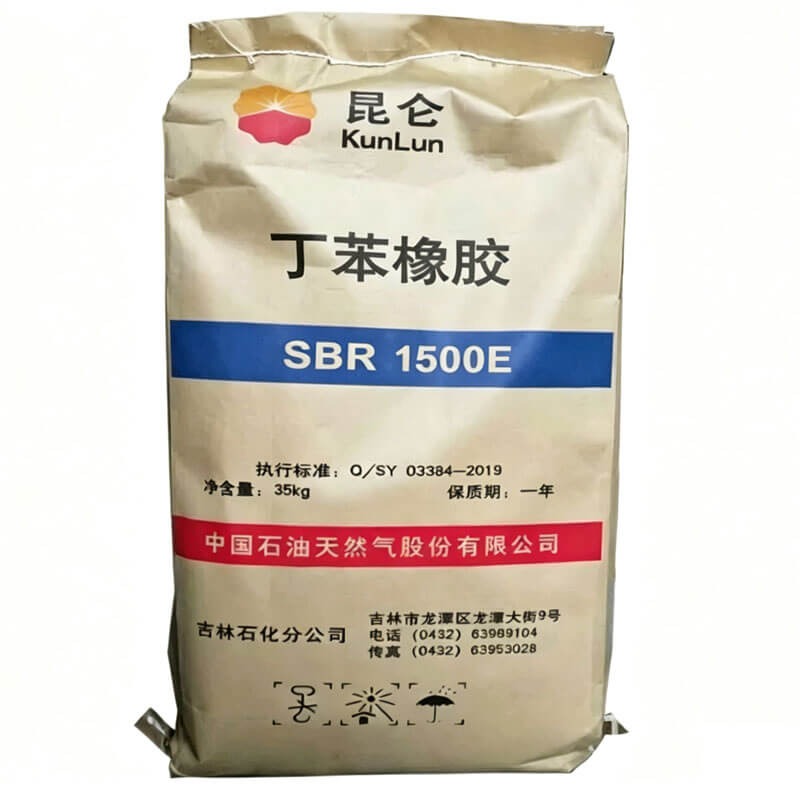
    • Product Name: Styrene‑Butadiene Rubber SBR 1500E
    • Factroy Site: No. 9 Longtan Avenue, Jilin City, Jilin Province
    • Price Inquiry: sales4@ascent-chem.com
    • Manufacturer: PetroChina Jilin Petrochemical Company
    • CONTACT NOW
    Specifications
    HS Code 508589
    Appearance White to tan solid bales
    Bound Styrene Content 23.5%
    Mooney Viscosity Ml 1 4 100 C 50
    Volatile Matter ≤0.75%
    Ash Content ≤0.75%
    Organic Acid Content 5-7%
    Soap Content ≤0.5%
    Specific Gravity 0.94
    Tensile Strength Cured ≥25 MPa
    Elongation At Break Cured ≥480%
    300 Modulus Cured 12-18 MPa
    Odor Mild characteristic rubber odor

    As an accredited Styrene‑Butadiene Rubber SBR 1500E factory, we enforce strict quality protocols—every batch undergoes rigorous testing to ensure consistent efficacy and safety standards.

    Packing & Storage
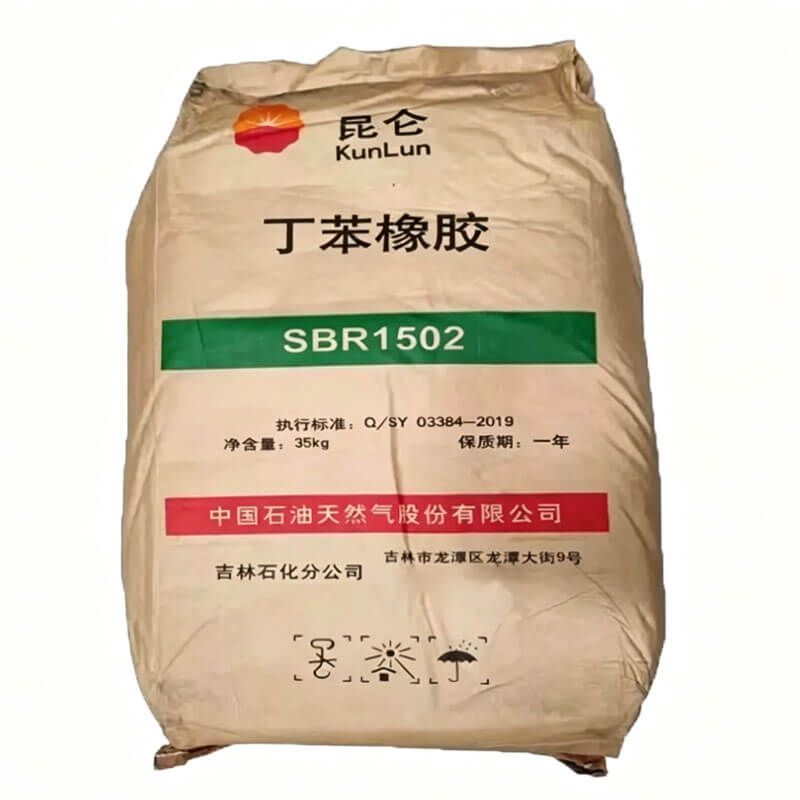
    Packing Supplied as 25 kg bales wrapped in polyethylene, 40 bales per pallet (1000 kg), pallets shrink-wrapped.
    Container Loading (20′ FCL) 20′ FCL: SBR 1500E bales stowed securely in ventilated container, protected from moisture, heat, and contamination.
    Shipping Styrene-Butadiene Rubber SBR 1500E ships as solid bales or pellets, typically in 25 kg woven bags, shrink-wrapped bales, or palletized loads. It is non-hazardous under normal transport conditions, requires dry, ventilated storage away from heat and ignition sources, and is shipped via truck, container, or rail with standard handling.
    Storage Store Styrene-Butadiene Rubber SBR 1500E in a cool, dry, well-ventilated area, away from direct sunlight, heat, ignition sources, ozone, and oxidizing agents. Keep packaging closed to prevent moisture pickup and contamination. Protect from physical damage and mechanical stress. Under recommended conditions, shelf life is typically two years from production date.
    Shelf Life Shelf life is typically 2 years when stored in a cool, dry area, protected from sunlight, ozone, and moisture.
    Application of Styrene‑Butadiene Rubber SBR 1500E

    In truck tyre retreading plants, SBR 1500E is introduced into cap compounds within a blend window of 30 phr to 50 phr on total rubber hydrocarbon, with the remaining elastomer typically SIR20 or STR20 natural rubber. SBR 1500E is a cold-polymerized emulsion SBR with nominal bound styrene 23.5% and Mooney ML 1+4 at 100 °C between 46 and 56; the styrene level raises room-temperature stiffness and abrasion resistance while reducing tack build on buffed casings below 0.35 N/mm unless the building layer is warmed to 40 °C. In two-stage mixing on an intermeshing internal mixer of 270 L chamber volume and 0.72 fill factor, the masterbatch comprises SBR 1500E 35 phr, NR 65 phr, N234 carbon black 52 phr, TDAE oil 6 phr, zinc oxide 3.5 phr, stearic acid 2 phr, 6PPD 2 phr, TMQ 1.2 phr, and microcrystalline wax 1 phr; the final stage adds sulfur 2.2 phr, CBS 1.2 phr, and PVI 0.2 phr. Masterbatch dump temperature is maintained between 140 °C and 150 °C, while the final dump is limited to 105 °C because the roller-die extruder imparts a temperature rise of 8–12 °C at the head. Calendered cap sheet of 0.8–1.2 mm thickness is slit into cushion gum and tread stock, assembled onto buffed casing, and cured in an autoclave at 115 °C for 2.5–4.0 h, depending on casing size. Material compliance rests on UN Regulation No. 109 for retreaded commercial-vehicle tyres, ISO 2230:2002 for storage of blended stock before calendering, and the supplier’s safety data sheet issued under REACH Regulation (EC) No 1907/2006, Annex II. Terminal product types are retreaded truck and bus tyres, trailer retreads, and precured cold-retread cap strips; the observed production failure mode is edge porosity at calender widths above 800 mm when Mooney lot variation exceeds 4 ML and the post-mill stock drops below 55 °C.

    What limits calender thickness uniformity when SBR 1500E cover compound is pressed directly onto EP/NN carcass fabric?

    The limiting factor is not total compound Mooney but the elastic memory of SBR 1500E after single-stage internal mixing. A cover formulation based on SBR 1500E 100 phr, N234 black 55–65 phr, TDAE oil 8–12 phr, zinc oxide 5 phr, stearic acid 1.5 phr, sulfur 1.8–2.2 phr, CBS 1.2–1.6 phr, 6PPD 2 phr, TMQ 1 phr, and antiozonant wax 1.5 phr is mixed in an intermeshing mixer and dumped at 145 °C; without post-mill homogenization, calender bank stock below 60 °C generates thickness scatter greater than ±0.2 mm across a 1000 mm roll. A two-roll mill with friction ratio 1:1.22 and front roll temperature 65 °C is inserted before the three-roll calender, and the stock is fed as a rolling bank of 25–30 mm diameter to stabilize the gauge. The cover is assembled to EP or NN fabric at thicknesses from 1.5 mm to 10 mm and cured in a rotocure press at 160 °C and 0.6 MPa for 20–35 min. Finished covers are tested under ISO 37:2017 for tensile properties and ISO 4649:2017 for relative volume loss in abrasion; the general-purpose textile belt specification is ISO 14890:2013. Where belts carry materials in above-ground quarry and recycling lines, ISO 340:2013 flammability is added to the test plan. Terminal product types are abrasion-resistant cover belts for stationary quarry conveyors, mobile transfer units, and aggregate recycling lines; service limitations are continuous deck temperatures above 90 °C and direct exposure to mineral oils, which cause excessive swelling of the SBR phase.

    Measured propertyStandard designationMeasurement condition or requirement basis
    Tensile strength and elongation at breakISO 37:2017Type 2 dumb-bell, 500 mm/min, 23 °C
    HardnessISO 7619-1:2010Shore A, 3 s reading
    Abrasion resistanceISO 4649:2017Rotating drum, 10 N, 40 ± 1 rpm
    Tear strengthISO 34-1:2022Trouser or angle test piece, 500 mm/min
    Accelerated ageingISO 188:201172 h at 70 °C
    Ozone resistanceISO 1431-1:202250 pphm, 40 °C, 20% strain

    In vulcanized rubber outsole manufacturing, SBR 1500E is compounded at 60 phr with high-cis BR at 40 phr to obtain a balance of low-temperature flexing and DIN abrasion resistance under wet concrete service. The masterbatch contains N330 black 50 phr, N774 black 10 phr, TDAE oil 5 phr, zinc oxide 4 phr, stearic acid 2 phr, 6PPD 1.5 phr, and microcrystalline wax 1 phr; the final curative addition is sulfur 2.1 phr, CBS 1.5 phr, and DPG 0.3 phr. Two-stage mixing is mandatory because a single-stage cycle in a 55 L intermeshing mixer at fill factor 0.70 produces scorch times shorter than 8.5 min at 121 °C when all curatives are present at 140 °C dump temperature. The final stock is cooled on a batch-off line, sheared on a two-roll mill to 6–8 mm, and compression moulded in 12-station hydraulic presses at 155–165 °C for 6–8 min. Outsole test methods follow ISO 20344:2021 for abrasion and flex resistance, and the safety footwear standard is ISO 20345:2021; European personal protective equipment conformity is assessed under Regulation (EU) 2016/425. Skin-contact PAH levels are controlled under REACH Annex XVII Entry 50 at 1 mg/kg per listed PAH. Terminal product types are vulcanized rubber outsoles for dry-service industrial work shoes, service boots, and general-purpose safety footwear; SBR 1500E is not specified for prolonged oil-wet outsoles or chemical-processing footwear because the hydrocarbon phase lacks polar oil resistance.

    When filler loading exceeds 100 phr in SBR 1500E mat stock, mill bagging and shrinkage control determine the maximum practical sheet width

    For dry industrial anti-fatigue mats, SBR 1500E is loaded at 100 phr with BR 20 phr, N330 black 80 phr, ground calcium carbonate 45 phr, paraffinic process oil 30 phr, zinc oxide 4 phr, stearic acid 2 phr, sulfur 2.2 phr, MBTS 1.5 phr, and DPG 0.4 phr. The high filler content requires a two-roll mill front roll at 50–55 °C to prevent bagging; calender sheet thickness is held between 4 mm and 10 mm, and the shrinking sheet is die-cut and placed into multi-cavity compression moulds. Press cure is at 150 °C for 30 min, with clamp tonnage and bump cycles adjusted by sheet weight to avoid trapped air at surface pockets. Finished mats are tested to ASTM D412-16 for tensile strength, ASTM D2240-15e1 for Shore A hardness, and ASTM D624-00(2020) for tear resistance; REACH Annex XVII Entry 50 applies at 1 mg/kg per listed PAH where the mats involve prolonged skin contact. Terminal product types are dry-service anti-fatigue mats for industrial workstations, assembly line walkways, and non-slip rubber flooring sheets installed in non-chemical areas.

    SBR 1500E as a bitumen modifier in reinforced waterproofing sheets

    Reinforced bituminous waterproofing membranes are produced with solid SBR 1500E after pre-mastication on a two-roll mill into porous crepe below 0.5 mm thickness and subsequent charging into a production-scale high-shear bitumen mixer at 170–190 °C. The addition ratio is 8–15 wt% of the total bitumen mass; below 8 wt% the low-temperature flexibility gain under EN 1109 does not reach the target for sheets installed below 0 °C, while above 15 wt% dispersion time can exceed 6 h and viscosity rises beyond the limits of continuous impregnation. The modified bitumen compound is fed to a doctor-blade coating line where polyester or glass-fibre carrier is saturated and both sides coated to a finished sheet thickness of 3–5 mm; granulated cap sheets and torch-applied underlay sheets are cooled, slit, and rolled. Formed sheets are tested to EN 12311-1 for tensile and elongation, EN 1427 for ring-and-ball softening point, and EN 1928 for watertightness; factory production control follows EN 13707:2013. Terminal product types are reinforced SBR-modified bituminous waterproofing membranes, underlay and cap sheets for low-slope roofs, and protected roof deck membranes.

    Compression moulding of SBR 1500E-based automotive grommets uses a base elastomer ratio of 65 phr SBR 1500E to 35 phr NR, with N550 black 70 phr, paraffinic oil 15 phr, zinc oxide 5 phr, stearic acid 1.5 phr, sulfur 2.0 phr, CBS 1.2 phr, and 6PPD 2 phr. The compound is extruded through a 90 mm cold-feed extruder with screw L/D 20:1 into preforms of 100–300 g, then compression moulded at 160 °C for 5–7 min in multi-cavity flashless dies. Production lots are tested under ASTM D2000-12 classification for automotive rubber materials, including tensile strength, elongation, hardness, and compression set; ozone cracking resistance is evaluated under ISO 1431-1:2022 at 50 pphm, 40 °C, and 20% strain. RoHS compliance follows Directive 2011/65/EU for lead and cadmium thresholds, and REACH supplier declarations include PAH limits where applicable. Terminal product types are non-oil-contact body plug grommets, cabin drain grommets, and dry-compartment anti-vibration bushings; these parts are not assigned to continuous contact with engine oil, brake fluid, or transmission seals, where NBR or ACM grades replace SBR 1500E.

    Free Quote

    Competitive Styrene‑Butadiene Rubber SBR 1500E prices that fit your budget—flexible terms and customized quotes for every order.

    For samples, pricing, or more information, please contact us at +8618136850665 or mail to sales4@ascent-chem.com.

    We will respond to you as soon as possible.

    Tel: +8618136850665

    Email: sales4@ascent-chem.com

    Inquiry

    Get Free Quote of PetroChina Jilin Petrochemical Company

    Flexible payment, competitive price, premium service - Inquire now!

    Certification & Compliance
    More Introduction

    Styrene–butadiene rubber SBR 1500E is a cold-polymerized emulsion copolymer supplied as a non-oil-extended, general-purpose elastomer. The 1500-series designation places the grade among staining-antioxidant E-SBR products under ISO 1629, while the E suffix is manufacturer-specific and should be confirmed against the supplier certificate of analysis. Bound styrene is controlled between 22.5 wt% and 24.5 wt% by ISO 2453, and raw-polymer Mooney viscosity ML(1+4) at 100 °C is typically specified from 46 MU to 58 MU by ISO 289-1. Volatile matter is limited to 0.75 wt% maximum under ISO 248, and sulfated ash is limited to 0.50 wt% maximum under ISO 247. Residual rosin acid emulsifier is commonly reported between 4.0 wt% and 6.0 wt%, with soap residues below 0.10 wt%, both determined by ISO 7781. These specification windows directly influence compound Mooney, filler wetting, and extrusion shrinkage.

    Typical release specification for SBR 1500E
    PropertySpecification windowTest method
    Bound styrene22.5–24.5 wt%ISO 2453
    Mooney viscosity ML(1+4) at 100 °C46–58 MUISO 289-1
    Volatile matter≤0.75 wt%ISO 248
    Sulfated ash≤0.50 wt%ISO 247
    Organic acid4.0–6.0 wt%ISO 7781
    Residual soap≤0.10 wt%ISO 7781

    Cold polymerization at temperatures below 15 °C produces a more linear chain architecture than hot-polymerized SBR grades and reduces the concentration of long-chain branching and gel. At a bound styrene content near 23.5 wt%, the raw copolymer exhibits a single glass transition temperature in the range of −50 °C to −55 °C. The styrene distribution is random rather than blocky, which limits crystallinity and prevents the native green strength observed in natural rubber. Because SBR 1500E contains 0 phr extender oil, the compounder controls plasticizer type and loading independently. This is in contrast to oil-extended grades such as SBR 1712, where 37.5 phr of oil is introduced before coagulation. The absence of extender oil increases raw-gum viscosity, raises mixing torque, and eliminates oil migration as a variable in storage and vulcanization.

    How does SBR 1500E differ from SBR 1502 and SBR 1712 in raw-polymer form?

    SBR 1500E and SBR 1502 are both non-oil-extended cold-polymerized styrene–butadiene copolymers, but SBR 1500E uses a staining antioxidant package, typically including amine-based stabilizers, whereas SBR 1502 is non-staining and relies on phenolic or phosphite stabilization. This distinction becomes critical in light-colored compounds, where contact or volatilized staining is evaluated according to ASTM D1148. SBR 1500E is not selected for white sidewalls or decorative mats unless an overcoat or isolation layer is proven. SBR 1712 is differentiated by its 37.5 phr extender oil, which reduces the effective Mooney viscosity and changes the vulcanization curve by diluting polymer network density. Consequently, at equal filler and curative loadings, SBR 1500E compound viscosity is higher than SBR 1712, and cured hardness is also higher because no oil is preloaded. Aging retention of SBR 1500E in air oven tests at 100 °C for 72 h is often superior to that of SBR 1502 because staining amine antioxidants are more active in unsaturated hydrocarbon rubbers than hindered phenolics, but specific retention values depend on cure system and filler.

    Mixing, milling, and rheological transition points

    On an internal mixer with a fill factor of 0.70 to 0.80 and a starting chamber temperature of 30 °C to 40 °C, SBR 1500E reaches a torque peak during the incorporation of carbon black and oil. The absence of extender oil produces a higher initial compound viscosity than SBR 1712, so rotor torque may increase by 10% to 20% for the same formulation, with the exact delta controlled by mixer geometry and ram pressure. Discharge temperatures should be maintained below 160 °C to avoid crosslink formation initiated by amine-stabilizer residues or acidic rosin acid residues. On a two-roll mill, the front roll is normally kept 5 °C to 10 °C cooler than the rear roll to promote release and reduce bagging at nip settings below 3 mm. Sulfur, accelerators, and zinc oxide are added in a final mill or internal mixer pass with temperatures below 110 °C to minimize scorch. Mooney viscosity measured at 100 °C by ISO 289-1 after mixing is not a direct predictor of extrusion output; capillary rheometry at shear rates from 100 s⁻¹ to 1,000 s⁻¹ is required to detect die swell differences between 1500E and oil-extended grades.

    In vulcanization, SBR 1500E responds to sulfur cure systems in a manner intermediate between natural rubber and EPDM. A conventional cure with 2.0 phr sulfur and 0.6 phr TBBS yields moving die rheometer t90 values in the range of 4 min to 12 min at 160 °C under ISO 6502, depending on filler surface area and pH. Semi-efficient vulcanization using a sulfur/accelerator ratio below 1.0 produces shorter crosslinks and improves compression set at 70 °C, but reduces tensile strength relative to conventional cure. The absence of strain-induced crystallization makes SBR 1500E susceptible to low green strength, so uncured sheets below 2 mm thickness can split during manual handling unless processing aids such as low-viscosity naphthenic oil at 3–5 phr are included. Rosin acid residues act as mild vulcanization activators; therefore, very low zinc oxide levels can shift the cure curve, and calibration of accelerator response is necessary when transferring formulations from solution-polymerized SBR grades.

    In a silica-filled passenger tire tread formulation with 80 phr highly dispersible silica and 8 phr mercaptosilane, SBR 1500E must be mixed at a silanization temperature between 140 °C and 155 °C. If the compound is discharged below 130 °C, the silane–silica condensation reaction is incomplete, and the unfilled compound Mooney can increase by more than 20 MU, causing downstream extrusion defects and reduced tread groove definition. Wet traction and abrasion are controlled by the balance between bound styrene and vinyl content. SBR 1500E, with higher trans and lower vinyl microstructure relative to solution SBR, tends to provide lower wet grip than solution SBR grades but offers easier processing and lower compound cost. Blending with 15–25 phr polybutadiene improves DIN abrasion and reduces heat build-up in truck retread compounds, but reduces wet traction proportionally.

    When sulfur donor systems replace conventional CV cure for improved reversion resistance

    If an application requires compression set resistance at 80 °C or repeated autoclave exposure, sulfur donor systems such as dithiomorpholine or a thiuram donor with 0.6–1.2 phr sulfur can be used. The cure network in SBR 1500E is more resistant to reversion than natural rubber because the synthetic polymer backbone does not undergo the same rate of main-chain scission at vulnerable sulfidic crosslink sites. Nevertheless, reversion still occurs at temperatures above 170 °C when conventional cure systems are held at pressure. Torque retentions below 90% of maximum torque indicate over-cure and loss of tensile properties. Sulfur donor systems reduce this loss by increasing the proportion of mono- and disulfidic crosslinks, and a shift from 70% polysulfidic to less than 40% polysulfidic crosslinks is typical. Such systems require longer cure times, and t90 may extend by 2–4 min at 160 °C when compared with a conventional cure.

    For molded mechanical goods and conveyor belt covers, a starting formulation with 50 phr N330 carbon black and 5 phr naphthenic oil may produce tensile strength of 18–22 MPa by ISO 37, elongation at break between 450% and 550%, and Shore A hardness of 62–68 by ISO 48. Actual values depend on mixing energy and cure time. SBR 1500E is not suitable for continuous service above 100 °C or for ozone exposure unless 1.5–3.0 phr p-phenylenediamine antiozonant and 1.0–2.0 phr microcrystalline wax are added, with weathering resistance checked by ISO 1431-1. The staining package also means that dry food-contact use should be verified against 21 CFR 177.2600; non-staining SBR 1502 is generally preferred for such applications.